
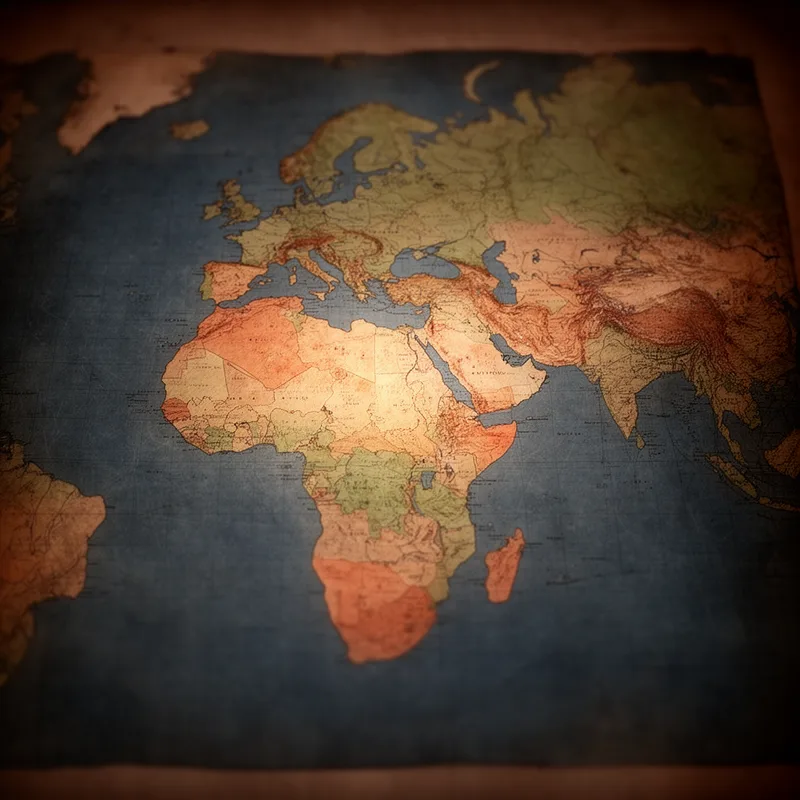
Old World
 15
4.7
15
4.7

- noun
- /oʊld wɜrld/
- The Inca built an empire that, if placed over the Old World, would stretch from Saint Petersburg to Cairo.
- Old World and New
- agriculture in the Old World
- Old World values
Loading YouTube…
Watch on YouTubeI love to remind people that we're primates, old world primates.
- I love to remind people that we're primates, old world primates.
- Actually, most civilizations, old world Europe included, had that same view of ordinary human beings that they couldn't be trusted to self govern.
Examples
-
"I am here to fetch the princess and her things for her journey to the Old World."
Fiction book (2000) -
The one who left the Old World for the New.
-
Soon all the languages of the Old World would pass by her bench.
Fiction book (2001) -
We believe we should welcome every good citizen from the old world among us.
Academic text (2000) -
Many plants and animals domesticated in the Old World now play major roles in the agriculture of the New World.
Academic text (1992) -
His examination of Old World cities also gave him an opportunity to critique modern notions of planning.
Academic text (1998) -
The so-called Columbian exchange, the transfer of plants, animals and microbes between the Old World and the new, transformed the diet and destiny of Europe.
-
The explorers documented their adventures in the Old World before embarking on their journey to the Americas.
-
Many traditional crafts in the Old World, such as pottery and weaving, have been passed down through generations.
-
The art and architecture of the Old World continue to influence modern design around the globe.
Synonyms
A large land area made up of Europe, Africa, and Asia
A single very large land area made of Africa, Europe, and Asia

A very large land area made of Africa, Europe, and Asia joined together
Surface Forms
Morphology
The phrase literally combines 'old' + 'world', so a learner can infer it refers to an earlier or existing part of the world and may guess a contrast with a 'New World'. However, its current meaning is a conventional geopolitical/historical term (Europe, Asia, Africa as known to Europeans before the Americas) that requires cultural or historical knowledge to identify the specific continents, so it is not fully predictable from the parts despite cross‑linguistic parallels (e.g. Spanish 'Viejo Mundo').
Etymology
The name Old World comes from when European explorers reached the Americas and called those lands the 'New World'. The lands they already knew, Europe, Asia and Africa, were then called the 'Old World', so Old World means the parts of the world known to Europeans before the Americas.