
Oaxacan
 1
7.5

- adjective
- /wɑˈhɑːkən/
- Yet there seems to have been a notable difference in the early 1990s between the Oaxacan state government's handling of the Chimalapas problem and that of the Chiapan state government.
- Oaxacan cheese
Examples
-
Several aspects of the Oaxacan woodcarving trade encourage innovation and specialization.
Academic text (2000) -
At the meeting on 16 December 1993 to discuss the deslinde problem, the Oaxacan and Chiapan governors disagreed openly.
Academic text (1998) -
I have seen the Oaxacan mountain Zempoaltepec.
Fiction book (1994) -
Like for instance, you know, you've got the Oaxacan green dent corn.
-
The Oaxacan woodcarving trade allows artisans within particular communities to innovate and specialize in their attempts to take advantage of such niches.
Academic text (2000) -
"Zapoteca's menu has a strong Oaxacan influence and is comprised of unique, wood-fired dishes with bold, authentic flavors that you aren't likely to find anywhere else in New England."
Blog text (28) -
The restaurant offers a variety of traditional Oaxacan dishes that highlight the region's rich culinary heritage.
-
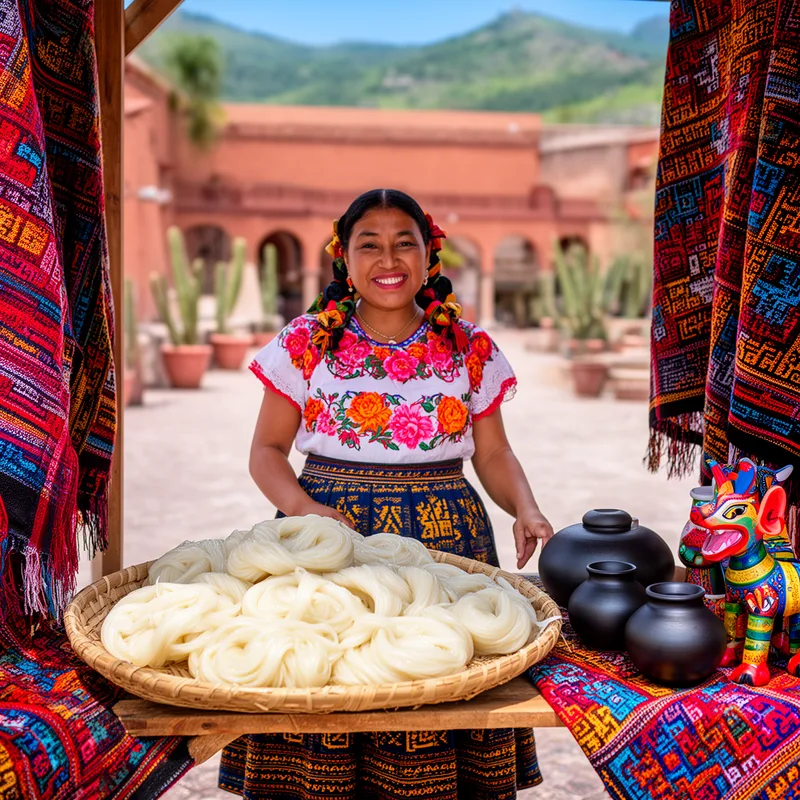
I purchased some vibrant textiles made by Oaxacan artisans during my trip to Mexico.
-
The festival celebrated Oaxacan culture with music, dance, and delicious food.
Synonyms
 600
1.0
Connected with Mexico, its people, language or culture
Surface Forms
Morphology
Etymology
Oaxacan comes from the place name Oaxaca, a region in southern Mexico, and Oaxaca itself comes from a native word that meant 'place of the huaje tree'. So, Oaxacan means 'from or about Oaxaca', which is why we use it for the region's food, art, and culture.