

Nyssa sylvatica
- noun
- /ˈnɪsə sɪlˈvætɪkə/
- Specialized
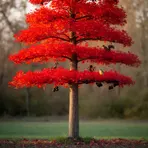
- The Nyssa sylvatica, commonly known as blackgum, changes color beautifully in the fall.
- blackgum (Nyssa sylvatica)
Examples
-
In many respects, blackgum (Nyssa sylvatica) is enigmatic, and it is certainly unique among eastern US hardwood species.
Academic text (2007) -
Range map for blackgum (Nyssa sylvatica) in the eastern United States (adapted from Little 1971).
Academic text (2007) -
Keywords: Nyssa sylvatica; land-use history; witness trees; forest geography; ecophysiology
Academic text (2007) -
PREFORMATTED TABLE Table 2. Ecophysiological and life history attributes of blackgum (Nyssa sylvatica).
Academic text (2007) -
No species in the eastern United States better exemplifies a ubiquitous yet subordinate tree than does blackgum (Nyssa sylvatica).
Academic text (2007) -
Many birds seek shelter in the branches of the Nyssa sylvatica due to its broad canopy.
-
In eastern North America, the Nyssa sylvatica is a favorite for landscapes because of its striking shape.
Synonyms
 1
9.9
1
9.9

A tree with a tall trunk, horizontal branches, and bright red autumn leaves

A tall tree in eastern North America with horizontal branches and bright red autumn leaves
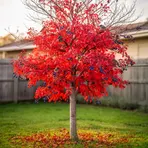
A tree that loses its leaves in autumn and has bright red leaves and small blue berries
Surface Forms
Morphology
Nyssa + sylvatica
This is a scientific Latin binomial (genus + species) serving as a proper name for a particular tree; its species identity and common-name meaning ('black gum tree') are lexicalized and not compositionally derived from the parts. One constituent here ('sylvatica') has no dictionary gloss, and even if a learner knew 'Nyssa' as a genus they would not reliably infer the species' common name or characteristics, so the expression is not transparently interpretable by a B1 learner.
Etymology
Nyssa sylvatica may come from a Greek 'water nymph' called Nyssa and the Latin word sylvatica, which means 'of the woods'. So the name suggests a woodland tree that likes wet places, which fits this eastern American tree with its tall, narrow shape and bright red leaves in autumn.