
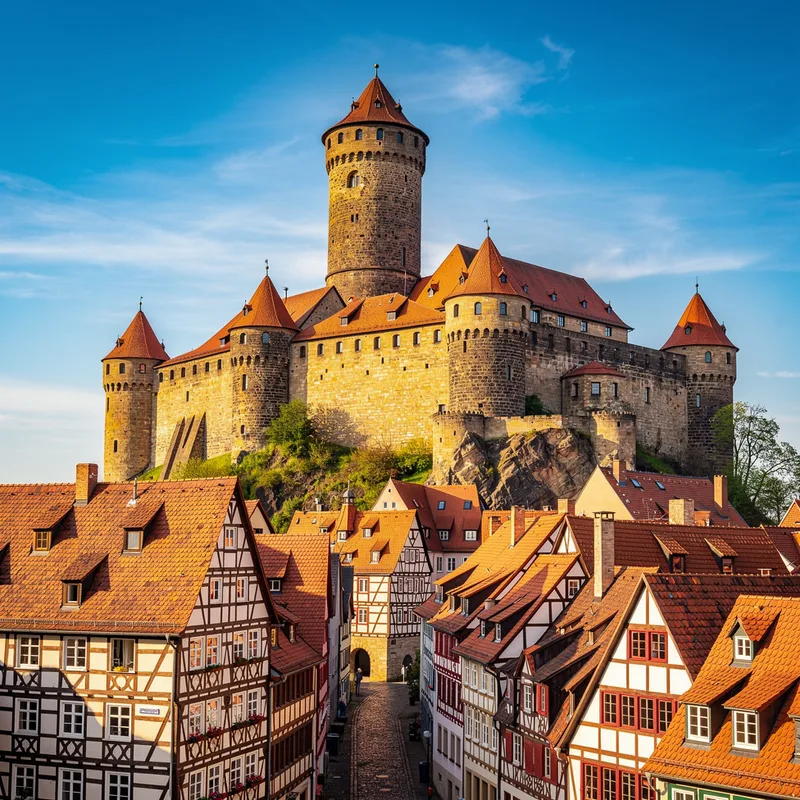
Nuremberg
 24
4.9
24
4.9

- proper noun
- /ˈnʊrəmˌbɜrɡ/
 :
Núremberg
:
Núremberg
- The leaders of the Nazi regime were held accountable for their actions during the Nuremberg Trials.
- Nuremberg trial
- Nuremberg tribunal
- Nuremberg principles
And it was one of the crimes included in the Nuremberg Charter.
- And it was one of the crimes included in the Nuremberg Charter.
- And then Weinberg, his other reflection, his friend says, you want to use an argument that didn't work at at Nuremberg.
- Do you know what the Nuremberg trials were?
- These horrible, evil Criminal Minds should have been hung at Nuremberg.
- The locals who are from airlining or Nuremberg, they were not used to seeing people who look like me.
- No Nuremberg trial took place in order to hold responsible those would repressed others in the aftermath of the collapse of the Soviet Union.
Examples
-
The trial of Saddam would have reinvigorated the Nuremberg principles, and the world would have been better for it.
Academic text (1994) -
The primary charge at Nuremberg was preparing, initiating, and waging wars of aggression.
Academic text (1994) -
What was the essence of the Nuremberg Laws?
-
In effect, he pleaded guilty at Nuremberg in his final statement.
Academic text (1994) -
And their leaders, now on trial in Nuremberg, couldn't have done it alone.
-
You ever hear about the Nuremberg trials, Trev?
-
Newspapers covered the 1935 enactment of the Nuremberg Laws, which stripped German Jews of the full rights of citizenship.
Academic text (2017) -
Moreover, Saddam Hussein should be tried by a Nuremberg-type tribunal for his war crimes.
Academic text (1991) -
Nuremberg is renowned for its historical significance and the site of major trials after World War II.
-
Many important legal precedents were established at the Nuremberg Trials for prosecuting war crimes.
Synonyms
A city in the southeast of Germany known for its medieval buildings and post-war trials
Compounds

- Formal

 1
9.9
1
9.9
A legal argument that someone was only following orders and not responsible for war crimes
Surface Forms
Etymology
Nuremberg comes from the German name Nürnberg, where the ending -berg means 'hill' or 'mountain', like the berg in iceberg. The first part probably comes from an old local name, and the whole name pointed to a town by a castle on a hill, so Nuremberg remembers its hilltop location.