
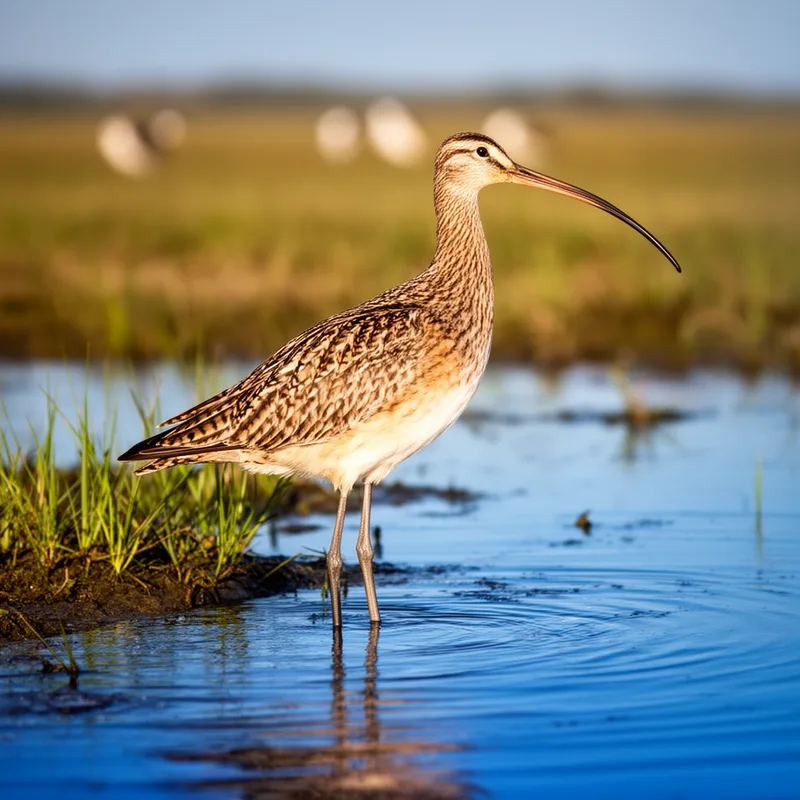
Numenius arquata
- noun
- UK
- The Numenius arquata is known for its distinctive, curved bill and haunting call.
Examples
-
Many wetlands have become crucial habitats for the Numenius arquata during migration season.
-
Have you ever seen a Numenius arquata in the wild?
-
Conservationists are working hard to protect the Numenius arquata from habitat loss and population decline.
-
The Numenius arquata is known for its distinctive curved bill.
-
Conservationists are working hard to protect the Numenius arquata from habitat loss and population decline.
-
Many wetlands have become crucial habitats for the Numenius arquata during migration season.
-
The Numenius arquata is known for its distinctive, curved bill and haunting call.
Synonyms

 1
8.6
1
8.6

A large wading bird with a long curved bill that lives by the sea

A large shore bird from Europe with a long curved bill and a loud haunting call
Surface Forms
Morphology
Numenius + arquata
This is a Latin binomial species name rather than an English compositional phrase; its meaning is a taxonomic label (the Eurasian curlew) and is not derivable from ordinary English word-parts. One constituent ('arquata') has no English dictionary meaning here and the genus name functions as a scientific label, so a B1 learner who knows the listed constituents would not be able to infer the common-language meaning.
Etymology
Numenius arquata may come from old Greek and Latin words that point to the bird's curved bill. arquata means 'arched' in Latin and Numenius may refer to a 'crescent moon' shape, so the name paints the image of a long bird with a bent, moon-like bill and helps you remember the Eurasian curlew.