
Novatianism


 1
9.9
- noun
- /noʊˈveɪʃənɪzəm/
- Literature
- Scholars study Novatianism to understand debates about forgiveness in the early church.
Examples
-
Many Christians opposed Novatianism because of its strict stance on lapsed believers.
-
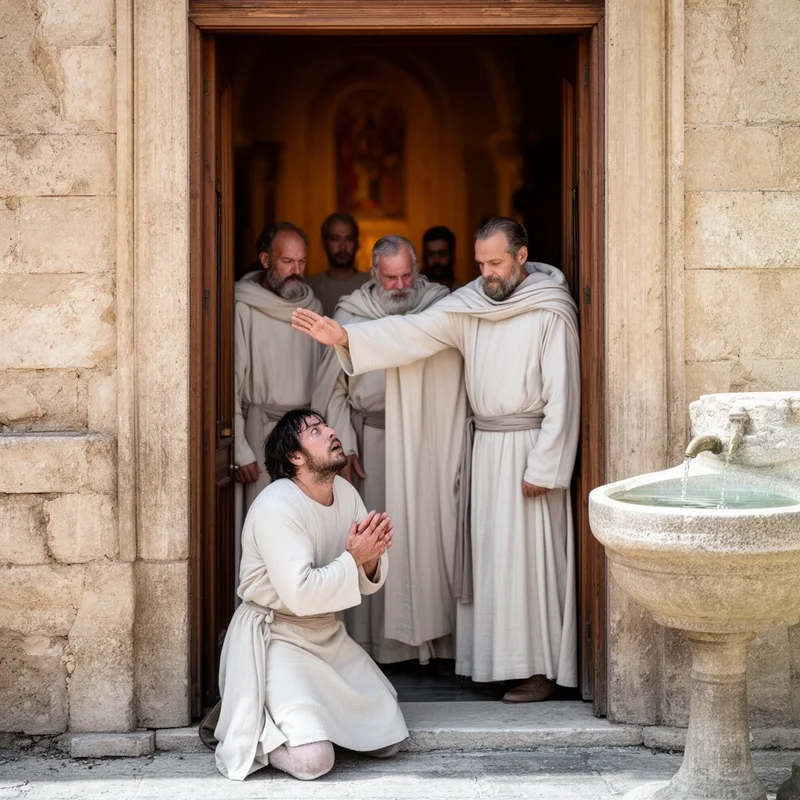
Novatianism arose as a response to the belief that those who had sinned after baptism should not be readmitted to the Novatianism.
-
The council condemned Novatianism as a heresy in early church history.
-
The church faced challenges from Novatianism in the 3rd century.
-
Many theologians studied Novatianism to understand its implications.
-
The doctrine of Novatianism emphasized strict discipline, refusing to forgive those who had fallen away from their faith.
-
In the 3rd century, Novatianism made waves as a sect that maintained a rigorous stance on moral purity within Christianity.
Antonyms


Surface Forms
Morphology
Novatianism = Novatian (semi-transparent) = Novatian + ism
The suffix '-ism' transparently signals a doctrine or sect, but the specific content requires knowledge of the proper name 'Novatian', which most learners will not have.
Etymology
Novatianism comes from the name of a 3rd-century priest, Novatian, who refused to readmit Christians who had seriously sinned after baptism. The name comes from the Latin root nov- meaning 'new', like in novel, and it names the strict Christian group that followed his view.