
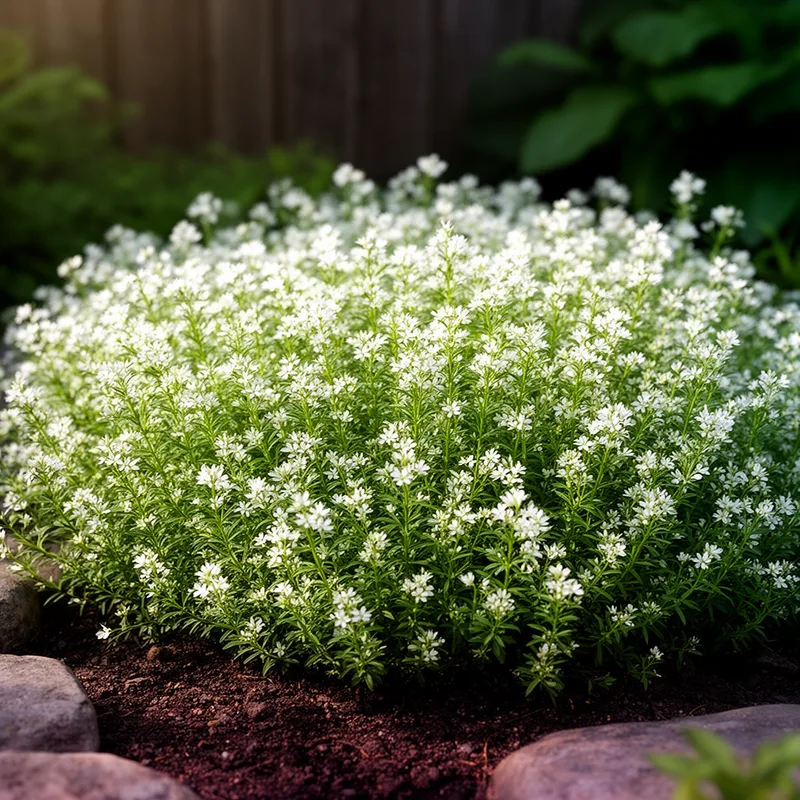
Northern bedstraw
- noun
- /ˈnɔrðərn ˈbɛdˌstrɔ/
- US
- Many people enjoy planting Northern bedstraw in their gardens for its delicate white flowers.
Examples
-
Some gardeners use Northern bedstraw as a ground cover because of its spreading habit.
-
Wild Northern bedstraw thrives along the riverbanks in this region.
-
The garden featured several Northern bedstraw plants in a shady corner.
-
Look at the beautiful Northern bedstraw!
-
The Northern bedstraw is lovely.
-
In the wild, Northern bedstraw can often be found growing in wet, shady areas.
-
The Northern bedstraw adds a touch of charm to the flower bed with its vibrant green foliage.
Synonyms

A plant in North America that lives for several years and gardeners often plant for its small white star-shaped flowers

A North American plant that grows each year with small white flowers and spreads across the ground
A small wild plant with thin stems and many tiny white or green flowers
Surface Forms
Morphology
The phrase is a straightforward adjective+noun compound: 'northern' (pertaining to the north) modifies 'bedstraw' (a type of plant), so a learner who knows both words can infer it denotes a bedstraw found in northern regions. This compositional pattern is common and cross-linguistically predictable, making the meaning immediately recoverable from the constituents.
Etymology
Northern bedstraw is named for old uses of 'bedstraw' plants: people used the plant's soft, fragrant stems as bed straw to fill beds and keep them smelling nice. The word Northern shows this species comes from the north, so the name points to a northern plant once used for 'bed stuffing'.

