
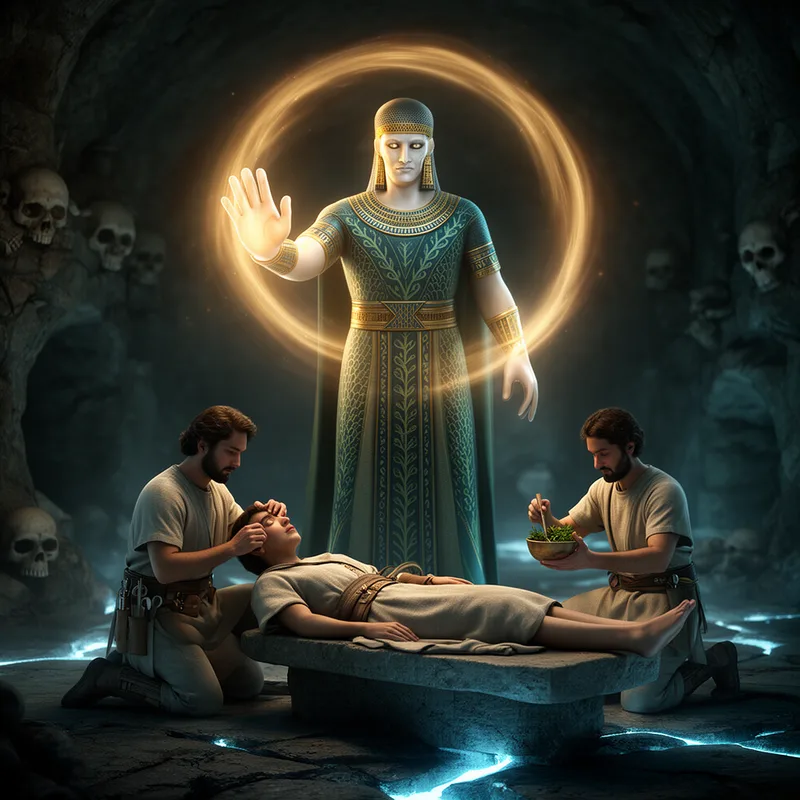
Ningishzida
- proper noun
- Literature
- Scholars believe Ningishzida played an important role in Babylonian medicine.
Examples
-
Ancient texts often depict Ningishzida as a guardian of the underworld.
-
The symbol of Ningishzida is frequently found on ancient Mesopotamian artifacts.
-
In ancient texts, Ningishzida is often associated with healing.
-
Ningishzida was revered as a god of the underworld.
-
In Sumerian mythology, Ningishzida is considered a key figure in the realm of healing and medicine.
-
Ancient civilizations viewed Ningishzida not only as a god of the underworld but also as a protector of health.
-
Art dedicated to Ningishzida often features themes of medicine, reflecting his significance in ancient Babylonian culture.
Surface Forms
Etymology
Ningishzida comes from old Sumerian parts: Nin 'lord', giš 'tree', and zida 'true' or 'good'. So imagine a 'lord of the good tree', a tree that links life and the world below, which helps explain why he is an underworld guardian and connected to medicine.

