
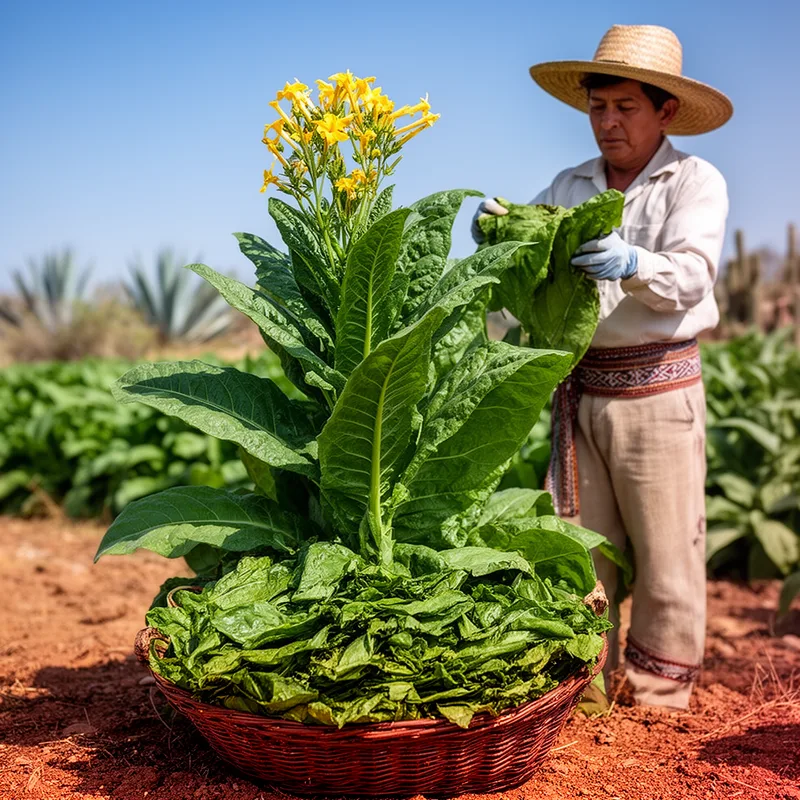
Nicotiana rustica
- noun
- /ˌnɪkəˈteɪniə ˈrʌstɪkə/
- Specialized
- The leaves of Nicotiana rustica contain much higher nicotine levels than ordinary tobacco.
Examples
-
The farmers in Mexico cultivate Nicotiana rustica for its strong flavor.
-
Museum displays showcased dried Nicotiana rustica to illustrate its cultural importance in Mexico.
-
Indigenous peoples traditionally grew Nicotiana rustica for shamanic rituals and healing ceremonies.
-
Have you ever tried Nicotiana rustica?
-
Indigenous peoples traditionally grew Nicotiana rustica for shamanic rituals and healing ceremonies.
-
The leaves of Nicotiana rustica contain much higher nicotine levels than ordinary tobacco.
-
Museum displays showcased dried Nicotiana rustica to illustrate its cultural importance in Mexico.
Synonyms

A plant from South America and Mexico used for medicine
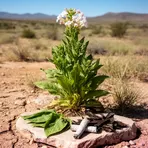
A wild plant from South America and Mexico with leaves used for smoking and not usually grown for sale
Surface Forms
Morphology
Nicotiana + rustica
This is a Latin binomial (genus + species) used as a technical taxonomic name; even if a learner knows that Nicotiana is a genus of herbs, the species epithet and the specific sense (‘a particular tobacco species with high nicotine content’) are technical and not transparently recoverable. The meaning is therefore idiomatic/technical rather than compositionally built from everyday English words, so a B1 learner would not be able to derive the full sense from the constituents.
Etymology
Nicotiana rustica is the name for a very strong wild 'tobacco' plant. Local people in South America and Mexico used its leaves in 'rituals' and 'healing' because the leaves have 'high nicotine' and cause very strong effects. So today the name refers to a type of 'tobacco' known for its strong, powerful effect.

