
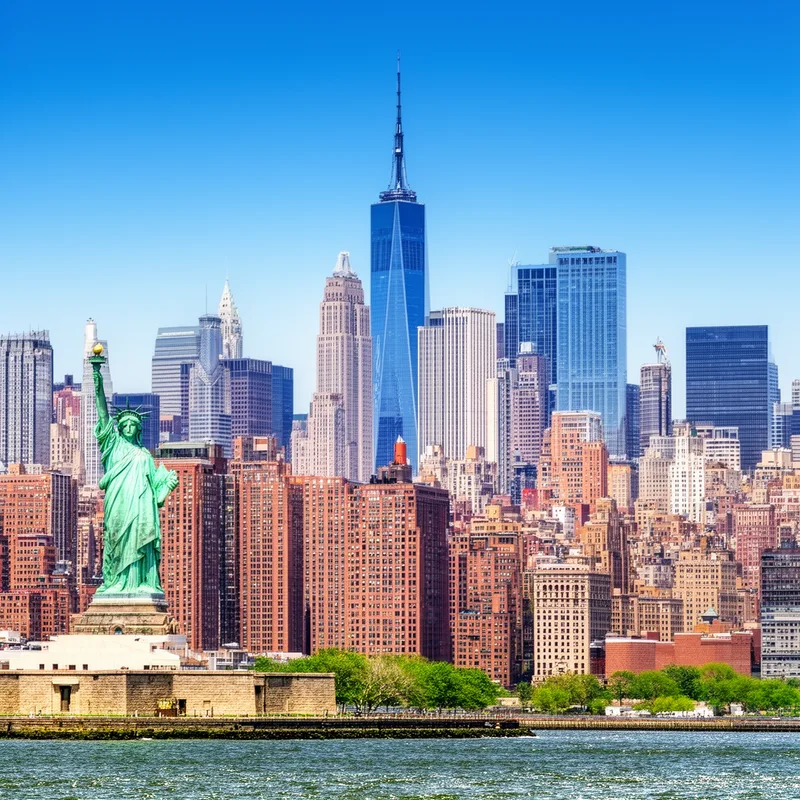
New York
 ∞
1.0
∞
1.0

- proper noun
- /nuː jɔrk/
 :
Nueva York
:
Nueva York
- What is your favorite thing about New York City?
- New York Times columnist
We'll see you back in New York, Kiara.
- We'll see you back in New York, Kiara.
- What is your favorite thing about New York City?
- And I was in New York with a band called XCNN.
- Because we all wanted to go to New York at that particular time.
- Now, he could be right here in New York, where I am today.
- I am back from New York and LA.
- And then I went to New York for my training in psychiatry.
- That's why they called him the King of New York, yeah.
- And its successors are the Living Theatre in New York and Harvard's own Poets Theatre.
- And I, I noticed that New York really helped me.
Examples
-
Many people dream of visiting New York to see Broadway shows and museums.
-
And Mike Bloomberg was the mayor of New York for three terms.
-
I want a summer in New York City with my friends.
-
I have to go back to New York now.
-
You know, if there was one place in the world that I could go, I think it would be New York.
-
Plans for a comparable school in New York City developed around this same time.
Academic text (2015) -
New York City is filled with people.
-
We'll see you back in New York, Kiara.
-
A year or so ago, while in New York, I took in John Logan's play Red.
Academic text (2011) -
We are heading to New York, NY.
Synonyms
 736
1.0
736
1.0
A very large city in the United States known for many landmarks and businesses
Surface Forms
Morphology
New + York
This is a toponym formed from the adjective 'New' plus the place-name 'York', so a learner who knows the constituent words can infer it denotes a place that is a 'new' version or settlement related to York. However, the precise referent (that it is a U.S. state or the famous city with specific geographic and administrative facts) is conventional and cannot be fully derived from the parts, making the transparency partial.
Etymology
New York comes from the 1600s, when the English took over the Dutch town New Amsterdam and renamed it for the Duke of York. So the name stuck and now means the famous 'city' we know today.