
New Orleans
 599
2.1

- proper noun
- /nuː ˈɔːrlɪnz/
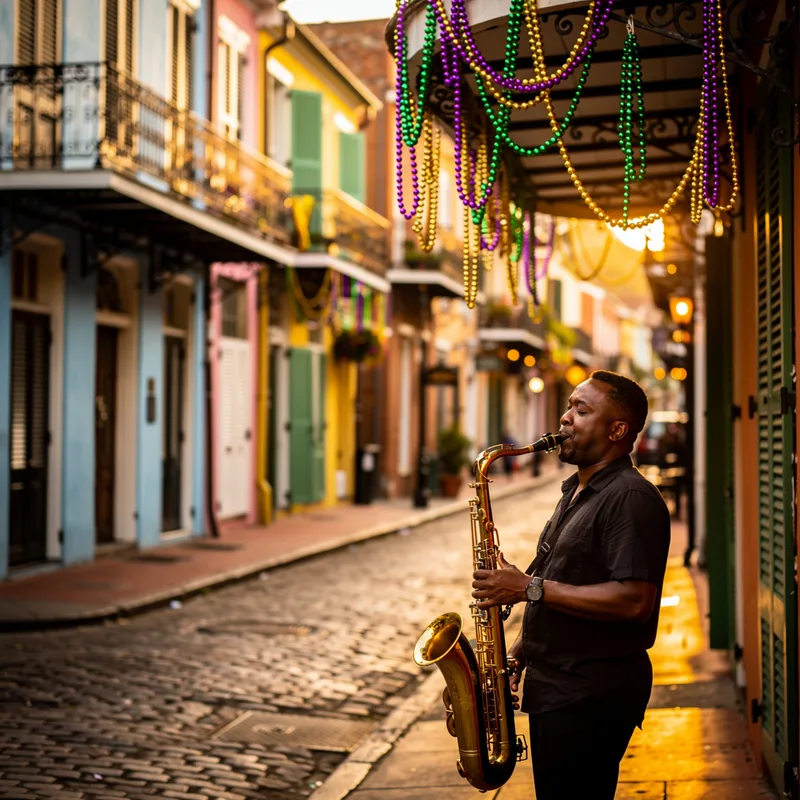
- Every February, the streets of New Orleans come alive with the celebration of Mardi Gras.
- New Orleans jazz
Loading YouTube…
Watch on YouTubeYes, which happened in New Orleans, where you are from.
- Yes, which happened in New Orleans, where you are from.
- OK, I'm from New Orleans, I go to Loyola.
- So one of the things we went to New Orleans and we went on a bunch of ghost tours.
- So I followed the Green Book and I travelled from New Orleans to Chicago.
- I saw, I first saw them at Tipitina's in New Orleans, just quite an experience.
- What a great Food City, I love New Orleans.
- And I was invited to a meeting in New Orleans.
- And so a lot of people knew what Oswald was doing in New Orleans.
- John was this musician from New Orleans.
- So, so they, they live in New Orleans, right across the street from the temple in New Orleans.
Examples
-
Miss Carter, New Orleans is the town for you.
-
Even though many vital signs remain weak, a feeling of quasi-normality is starting to return to New Orleans.
Academic text (2007) -
Yes, which happened in New Orleans, where you are from.
-
I was in New Orleans and I was trying to act.
-
I was just in New Orleans over Christmas break for no reason.
-
When we leave New Orleans, maybe we can head over to Paris.
-
We're coming back to New Orleans!
-
A lot of great stuff here in New Orleans and in Louisiana.
-
So I followed the Green Book and I travelled from New Orleans to Chicago.
-
My name is Abraham, I'm from New Orleans, LA.
Surface Forms
Morphology
New + Orleans
The prefix 'New' signals a toponymic pattern (New + place) that indicates a place name, so a learner who knows 'new' can infer this is a place named after 'Orleans'. However, 'Orleans' has no transparent, independent meaning for most learners and the specific cultural/geographic meaning of 'New Orleans' (a major port, jazz/Mardi Gras city) cannot be derived from the parts, so only partial comprehension is possible.
Etymology
New Orleans was named by French settlers who called the town a 'new' version of the French city Orléans to honor a French leader. So the city's French roots help explain why New Orleans is known for jazz, food, and Mardi Gras today.