

Neverland


 1
8.6
1
8.6
- noun
- /ˈnɛvərˌlænd/
- Informal
- Defoe could not simply escape to some virtual neverland.
Examples
-
How exactly do you think it helps scientific literacy at large if anyone can just make up any claim about the world, declare it to be "supernatural" or "transcendent" (without ever saying what that even means), and then expect science to respectfully tiptoe away from the epistemological neverland the supernaturalist has just defined himself into?
Blog text (4) -
And that is an illusion is created, a Never Neverland is created.
-
This song brings you to an unbelievably glorious, joyful, and faraway neverland experience.
Blog text (5) -
In her mind, she often escapes to a neverland where her responsibilities disappear and she can play all day.
-
He dreams of living in a neverland free from the pressures of adulthood and filled with endless adventures.
-
Reading fantasy books takes him to a neverland where anything is possible and reality doesn't exist.
Synonyms
 21
4.4
21
4.4
An imagined place in your mind with magic and strange creatures
 13
5.1
13
5.1
A pleasant imaginary place you visit in sleep or imagination
 7
5.5
7
5.5
A beautiful imaginary place in stories where small magical creatures live
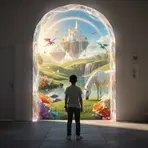 3
6.1
3
6.1
An imaginary place where everything is perfect and magical
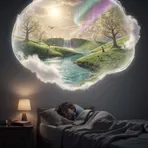 2
8.8
2
8.8
A made-up perfect place that exists only in dreams
 2
6.6
2
6.6
An imagined perfect place that exists only in dreams
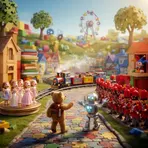 1
7.0
1
7.0
A fictional place where toys come alive and have adventures
 1
8.0
1
8.0
An imaginary land of dreams in stories and books
 1
8.9
1
8.9
A mysterious state between reality and imagination

An imagined place or state not connected to real life

A place that exists only in the mind or in stories
Surface Forms
Morphology
Etymology
Neverland comes from never ('not ever') and land ('place'), so imagine it as a 'place of never'. People use Neverland to mean an imagined escape where someone avoids real life and adult responsibilities.