
Neurospora


 1
9.9
- noun
- /ˌnjʊəroʊˈspɔːrə/
- Specialized
- Mutations in any of these core circadian genes can alter the period, entrainment, or temperature compensation of the Neurospora clock.
- Neurospora crassa
Examples
-
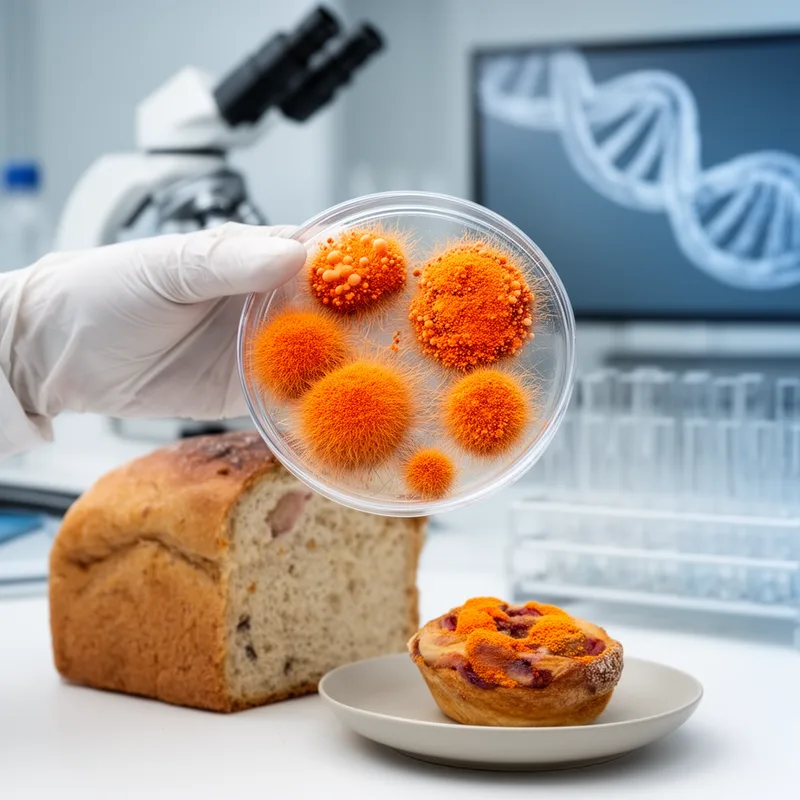
The center of this petri plate was inoculated with a few spores of Neurospora, and the culture was grown in cycles of 12 hours of light and 12 hours of dark.
Academic text (2005) -
(a) Hyphal growth of Neurospora crassa.
Academic text (2008) -
"What we understand about animal clocks is still largely derivative from what we understand about flies and Neurospora," says Loros.
Academic text (2005) -
Loros was also surprised to find circadian expression of a glycolysis enzyme in a Neurospora microarray.
Academic text (2005) -
The fungus Neurospora crassa produces asexual spores in a circadian rhythm.
Academic text (2005) -
As in animals and plants, the Neurospora clock consists of an autoregulatory negative feedback transcription loop, with two transcription factors driving the expression of a clock gene called frequency, which, after a delay, inhibits its own transcription.
Academic text (2005) -
Studies in Neurospora crassa, the filamentous fungus that appears on stale bread and overripe fruit, have helped to reveal circadian properties common to all organisms, such as negative feedback and light entrainment.
Academic text (2005) -
The researchers used Neurospora to study the effects of light on fungal growth.
-
In some bakeries, Neurospora can spoil bread and other baked goods if not managed properly.
-
Genetic experiments with Neurospora have led to important discoveries in molecular biology.
Surface Forms
Etymology
Neurospora comes from Greek parts neuro- 'nerve' and -spora 'spore' because its spores and thread-like parts look a little like tiny nerves. So Neurospora is a fungus named for its 'nerve-like' spores, which helps you remember it as the orange-spored mold used in genetic research and sometimes causing spoilage in bakeries.