
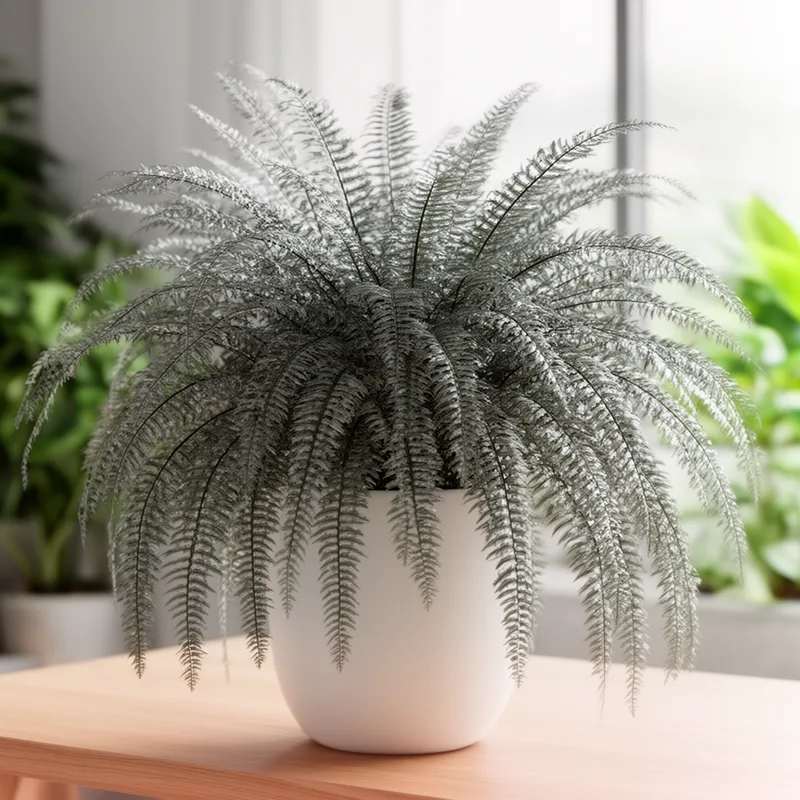
Nephrolepis pectinata
- noun
- Specialized
- The Nephrolepis pectinata thrives in warm, humid environments and is popular as an ornamental plant.
Examples
-
The lightly scented, feathery fronds of Nephrolepis pectinata make it a favorite for indoor gardens.
-
Botanists have documented Nephrolepis pectinata in forests from Mexico to Brazil.
-
The Nephrolepis pectinata is a popular choice for indoor gardens.
-
Have you seen the Nephrolepis pectinata at the botanical garden?
-
The Nephrolepis pectinata is often cultivated for its delicate, greyish-green fronds that add beauty to gardens.
-
In tropical landscapes, Nephrolepis pectinata is commonly found due to its preference for humid conditions.
-
Gardeners appreciate Nephrolepis pectinata for its ability to thrive indoors and bring a touch of greenery to living spaces.
Synonyms

A tropical plant with grey-green leaves made of many thin parts used in shaded gardens
Surface Forms
Morphology
Nephrolepis + pectinata
The phrase is a botanical binomial: combining a known genus name ('Nephrolepis' = a genus of ferns) with a species epithet. A learner who recognises the genus can infer this refers to a particular type of Nephrolepis (i.e., a fern), but the specific descriptive sense ('pectinata') is Latin/technical and not predictable to a B1 learner, so the full definitional detail is not transparent.
Etymology
Nephrolepis pectinata comes from old words: nephro ('kidney') and lepis ('scale') in Nephrolepis, and pectinata meaning 'comb-like'. These words make a clear picture of many small, scale-like parts along the fern's leaves, so the name helps you remember its thin, comb-like leaf shape.

