
Nepalese
 5
3.5
5
3.5

- adjective
- /ˌnɛpəˈliz/
- My work has helped to found a small school for Nepalese children in Sankhu village.
- Nepalese participants
- Nepalese band
- Nepalese men
Loading YouTube…
Watch on YouTubeSo as Americans, our stomach can't take the Nepalese water.
- So as Americans, our stomach can't take the Nepalese water.
- And like, almost like in Nepalese culture, it's, it's now it's your responsibility to sort of right that path, almost.
- And, and so Nims Persia is this great Nepalese climber, former British special forces and all these other.
Examples
-
Also, the Nepalese women reported greater life satisfaction than the Nepalese men did.
Academic text (1996) -
Prior to that, brass band music was the exclusive prerogative of the Nepalese royalty and aristocrats in the capital, Kathmandu.
Academic text (1991) -
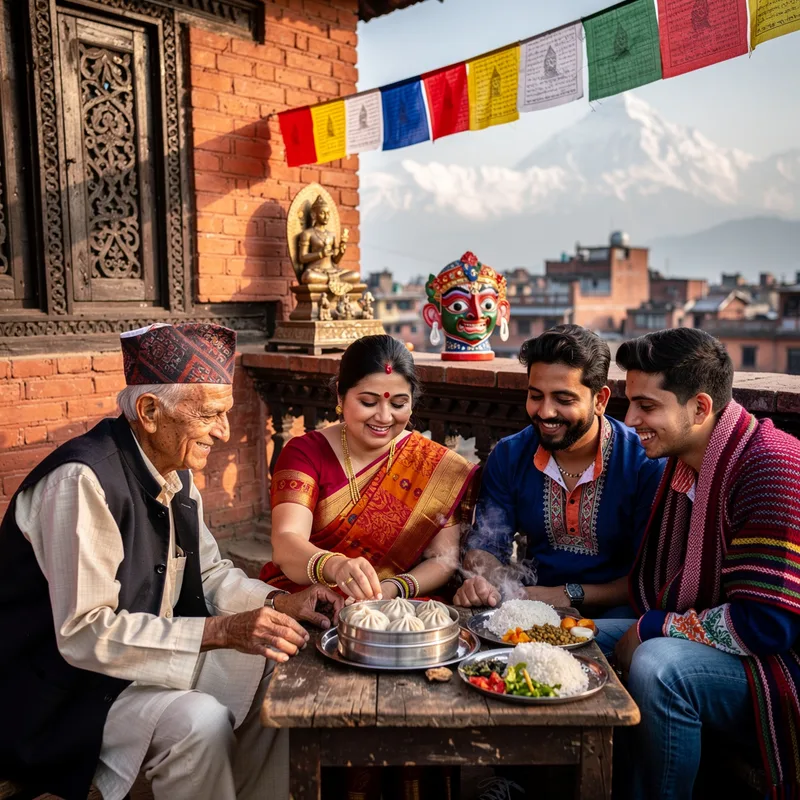
But to come here, where it is the full on traditional Nepalese pizza, this spot is a must try.
-
You ever heard stories about the gratitude of the Nepalese people?
-
Dinner included a Western supper followed by a full Nepalese meal.
Fiction book (2002) -
UMN's overall mission is to make life easier for the Nepalese people.
Academic text (1995) -
In the present study, we examined the relationship between depression and life satisfaction among Nepalese and Australian university students.
Academic text (1996) -
During the forty years since their inception, folk brass bands have become an established part of Nepalese music.
Academic text (1991) -
Speculation remains whether such an ideological shift will, or is, affecting the traditionalism of the Nepalese people.
Academic text (1996) -
The Nepalese culture is rich with traditions and festivals that reflect its history.
Synonyms
 2
4.4
2
4.4
Related to Nepal, its people, or culture
Compounds

Surface Forms
Morphology
Etymology
The word Nepalese comes from the country name Nepal plus the ending -ese, which is used to say 'from a place', as in Chinese or Japanese. So Nepalese means 'relating to Nepal', its people, language, or culture.