

Nematocera
- noun
- /ˌnɛm.əˈtɒs.ə.rə/
- Specialized
- The Nematocera suborder includes well-known insects like mosquitoes and gnats.
Examples
-
Researchers study the life cycles of Nematocera to better understand disease transmission.
-
Adult Nematocera are often characterized by their long, delicate legs and antennae.
-
The Nematocera are known for their long antennae.
-
Many species of Nematocera can transmit diseases.
-
The Nematocera suborder includes well-known insects like mosquitoes and gnats.
-
Researchers study the life cycles of Nematocera to better understand disease transmission.
-
Adult Nematocera are often characterized by their long, delicate legs and antennae.
Synonyms
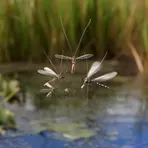
A group of slender flies with long thin antennae like mosquitoes and crane flies
Compounds
- Specialized
A group of slender flies with long thin antennae like mosquitoes and crane flies
Surface Forms
Morphology
Nematocera = nemato + cera
The term is a technical taxonomic compound built from classical combining forms (not productive standalone English words), so its structure and meaning are not transparent to an average B1 learner.
Etymology
Nematocera comes from the Greek parts nema ('thread') and keras ('horn'), so it literally means 'thread-horn'. This is an easy image: these flies, like mosquitoes and gnats, have very long, thin antennae or feelers that look like thread-like horns, which is why they are called Nematocera.

