
Negritude
 1
9.9

- noun
- /nɛɡrɪˌtud/
- Literature
- Sow became familiar with the ideas of Pan-Africanism and the Negritude movement.
- Africanism through Negritude
- tenets of Negritude
- Negritude movement
Examples
-
Senghor himself repeatedly noted that Negritude was more a theme than a style.
Academic text (2002) -
Celebrating blackness or "negritude," deeply rooted in the soil (memory) and growing to full flower (imagination), is the way to liberation.
Academic text (2009) -
His policies were informed by a firm commitment to Negritude.
Academic text (2002) -
I was inspired by the theory of Negritude that, back then, you must recall, was unique.
Academic text (2002) -
The institutionalization of Negritude's tenets was most noticeable within the workings of the fine arts academy throughout the 1960s and 1970s.
Academic text (2002) -
Papa Ibra Tall was a leading figure of the École de Dakar and a supporter of Negritude.
Academic text (2002) -
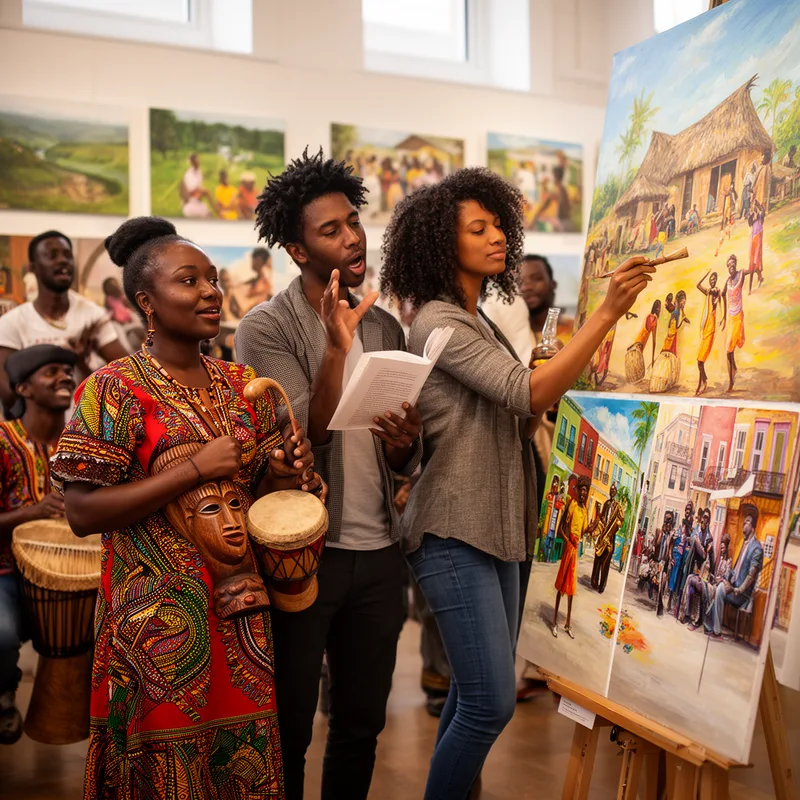
The Negritude movement inspired many artists to explore themes of heritage and pride.
-
Through the lens of Negritude, writers emphasized the importance of racial identity and cultural roots.
-
The philosophy of Negritude celebrates the beauty and richness of Black culture.
Synonyms
 1
7.7
A way of thinking that values African culture, history, and identity for people with African roots
Surface Forms
Etymology
The word Negritude was created in French by Black writers to name pride in Black culture and identity. It comes from French nègre 'black' and the ending -itude 'state' or 'quality', like in attitude, so Negritude means the 'state of being Black' and became the name of a movement that celebrates Black life and art.