

Nationalist China
- noun
- In 1949, Nationalist China became synonymous with the Republic of China as it sought international recognition.
Examples
-
According to Rummel's painstaking research, four regimes committed the overwhelming majority of mass killings in the last century: the Soviet Union, nationalist China under Chiang Kai-shek, communist China, and Nazi Germany.
Academic text (2000) -
To represent her husband and Nationalist China, she made her visit into a national campaign tour.
Academic text (2000) -
Later, this commitment to "support America's proposals once a divergence of views among the United States, Britain, and the Soviet Union occurs" became one of the most important principles for Nationalist China's role in postwar international politics.
Academic text (2000) -
Throughout the spring of 1943, Mme. Chiang traveled around the United States, from Washington D.C. to New York to Boston to Chicago to San Francisco to Los Angeles, pumping up American concerns for Nationalist China at every stop and arousing American enthusiasm for China.
Academic text (2000) -
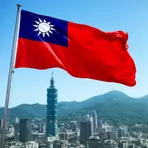
The government of Nationalist China was established on the island of Taiwan after the Chinese Civil War in 1949.
-
Chiang Kai-shek led Nationalist China from Taiwan, continuing his rule after losing the mainland to communist forces.
Synonyms
 9
4.1
9
4.1

A government on the island of Taiwan since 1949
Surface Forms
Morphology
The phrase compositionally denotes a China associated with 'nationalists' and so a B1 learner who knows both words can infer it refers to a nationalist-led Chinese polity. However, the precise historical/political referent (the Republic of China on Taiwan established in 1949) is specialized world knowledge not deducible from the constituents alone, so the expression is not fully transparent.
Etymology
Nationalist China gets its name from the 'Nationalist party' that led China before 1949. When that party and its leader Chiang Kai-shek lost the civil war and moved their government to the island of Taiwan, people used 'Nationalist China' to mean the 'Republic of China' there, so today the phrase refers to that government.