
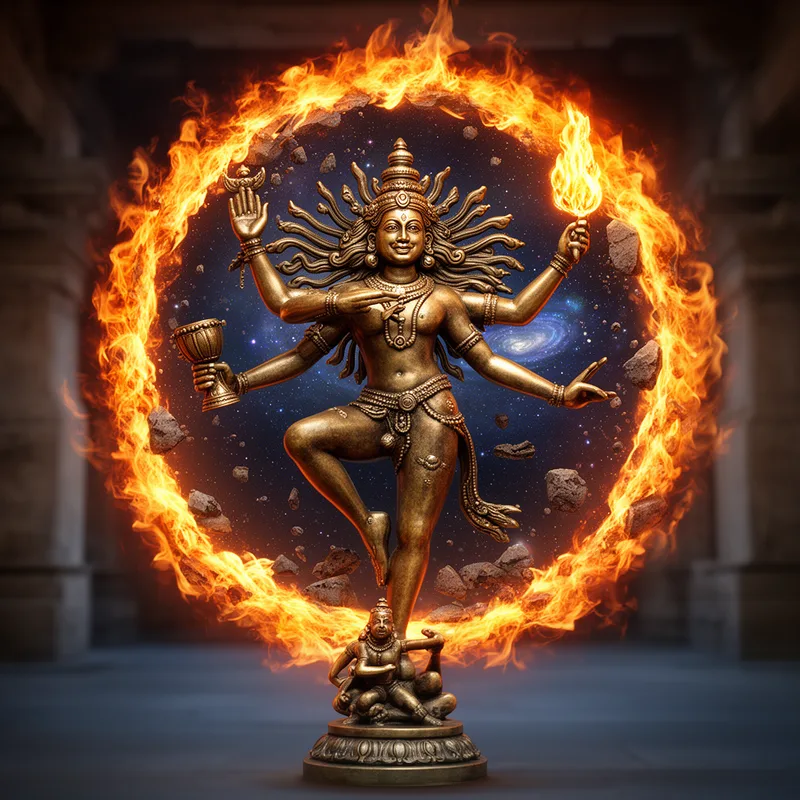
Nataraja


 1
9.9
- proper noun
- /nɑːtəˈrɑːdʒə/
- Literature
- In Hindu temples, Nataraja is often depicted in vibrant colors.
Examples
-
The image of Nataraja captures the dynamic energy of the universe in Hindu philosophy.
-
The statue of Nataraja beautifully captures the essence of cosmic dance.
-
The bronze statue of Nataraja is a famous symbol of Indian art and spirituality.
-
Many temples in South India feature intricate carvings of Nataraja in their sanctuaries.
-
The sculpture of Nataraja in the museum vividly illustrates Shiva's dance of creation and destruction.
-
Historians study the Nataraja figure to understand its significance in Hindu mythology and art.
-
In many temples, worshippers offer prayers in front of the Nataraja as a symbol of cosmic balance.
Surface Forms
Etymology
Nataraja comes from the Sanskrit parts nata 'dancer' and raja 'king'. It means the 'king of dance', which is why the statue shows Shiva as a cosmic dancer who makes, keeps, and ends the world.