

Narcissus
 4
9.9
4
9.9

- proper noun
- /nɑːrˈsɪsəs/
- Literature
- The themes of exile and identity also feature strongly in Egyptian author Somaya Ramadan's "Leaves of Narcissus," excerpted from the novel of the same title, winner of the 2001 Naguib Mahfouz Medal for Literature.
- Narcissus myth
Loading YouTube…
Watch on YouTubeRemember, in the myth, Narcissus was a young, attractive guy.
- Remember, in the myth, Narcissus was a young, attractive guy.
- So he that's according to the ancient myths of Narcissus, he fell in love with himself.
Examples
-
The scene was from Salvador Dali's painting "Metamorphosis of Narcissus."
Fiction book (2002) -
Here, Flaubert, in rewriting the myth of Narcissus, creates a new type of narcissism.
Academic text (2003) -
Remember, in the myth, Narcissus was a young, attractive guy.
-
Echo was a young girl in love with Narcissus.
Fiction book (2002) -
Admiring pretty things is fun, but look at what happened to Narcissus when he took it too far.
Blog text (11) -
Like Narcissus, he sees himself in the fountain that then mirrors back sympathy.
Academic text (2000) -
Interestingly, in all of the Greek myths, Narcissus was not a nice guy.
-
To distinguish between reflective analysis and reflection in isolation, Cheville (1998) used the Greek myth of Narcissus.
Academic text (1998) -
The tragic tale of Narcissus teaches the consequences of excessive self-love.
-
According to Greek mythology, Narcissus was transformed into a flower after his fascination with his own reflection.
Compounds

- Specialized
A type of daffodil with a sweet smell and yellow or white flowers in small bunches
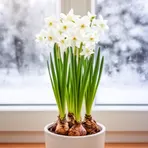
- Specialized
A white daffodil with star-shaped flowers often grown indoors for winter blooms
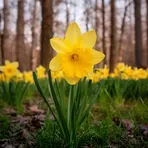
- Specialized
A wild daffodil with bright yellow, trumpet-shaped flowers that bloom in spring
Surface Forms
Etymology
Narcissus comes from a Greek myth about a beautiful young man who fell in love with his own reflection in a pool. That's why his name now stands for extreme 'self-love' and gives us the modern word 'narcissism'.