

Napoleon
 122
4.8
122
4.8

- proper noun
- /nəˈpoʊliən/
- What did happen when Napoleon tried to conquer Russia?
- Napoleon Bonaparte
- Napoleon's wars
- Napoleon's defeat
Loading YouTube…
Watch on YouTubeWhen we wanted to learn a fact about Napoleon, we could Google it.
- When we wanted to learn a fact about Napoleon, we could Google it.
- But like, is there even a Julius Caesar, a Napoleon of our day?
- Like many dictators then and now, Napoleon came in with talk of restoring democracy.
- Russia's been invaded time and time again from the West by Napoleon, by Hitler, etcetera.
- So remember MacArthur, remember Jefferson, remember Napoleon, and you'll see that the magic is easy.
- Like that's why he could talk to Napoleon without like not on the thin veil day.
Examples
-
Emperor Napoleon, call your first witness.
-
After his defeat at Waterloo, Napoleon was exiled to the island of Saint Helena.
-
When we wanted to learn a fact about Napoleon, we could Google it.
-
You see, Napoleon wanted to do this to feed his troops.
-
OK, I'm going to talk about Napoleon today.
-
Napoleon had a couple of enemies too.
-
Napoleon Bonaparte has ordered the arrest of all English people in France
-
Like many dictators then and now, Napoleon came in with talk of restoring democracy.
-
Students will observe and critique the painting "Napoleon Crossing the Alps."
Academic text (2011) -
NARRATOR: One fateful Sunday at a meeting, Napoleon and Snowball are debating the future of Animal Farm.
Fiction book (1999)
Synonyms
 11
6.1
11
6.1
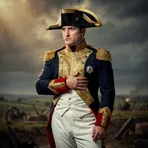
A French general and emperor from the late 1700s to the early 1800s
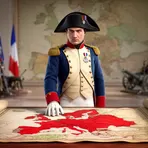
A French general and emperor who ruled much of Europe in the early 1800s

A French general who became emperor and led large wars across Europe
Surface Forms
Etymology
Napoleon comes from the Italian name Napoleone, a personal name used in Italy and Corsica. A helpful way to remember it is to think of Napoli 'Naples', so the name sounds like 'man of Naples' and helps you recall the French leader who became emperor.