

Napaea dioica
- noun
- Specialized
- Napaea dioica naturally grows in wet, alluvial soils found near rivers in the eastern United States.
Examples
-
The large palmate leaves of Napaea dioica make it easy to identify among other wildflowers.
-
Botanists are studying the population dynamics of Napaea dioica in its native habitat.
-
Napaea dioica thrives in moist, rich soils along riverbanks in the Midwest.
-
The Napaea dioica thrives in wet, alluvial soils.
-
Have you ever seen a Napaea dioica in bloom?
-
The distinctive palmate leaves of Napaea dioica help botanists identify this plant in the field.
-
Napaea dioica produces small dioecious flowers that bloom in the springtime in its natural habitat.
Synonyms
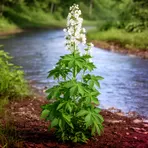
A tall wild plant with palm-shaped leaves and small white flowers growing near rivers in eastern and central United States
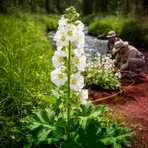
A rare flowering plant called glade mallow
Surface Forms
Morphology
Napaea + dioica
This is a Latin binomial (taxonomic) name: 'Napaea' is a genus label and 'dioica' is a Latin adjective not defined here, so the phrase functions as a specialized species name rather than a composition of familiar English words. A B1 learner who knows the listed constituents (and with 'dioica' undefined) would not be able to derive the botanical description from the parts, so the expression is opaque.
Etymology
Napaea dioica comes from old Greek and Latin words. Napaea refers to 'valleys' or low river places where the plant likes to grow, and dioica means 'two separate plants' because the male and female flowers grow on different plants, so the name helps you remember both its valley home and its separate sexes.

