
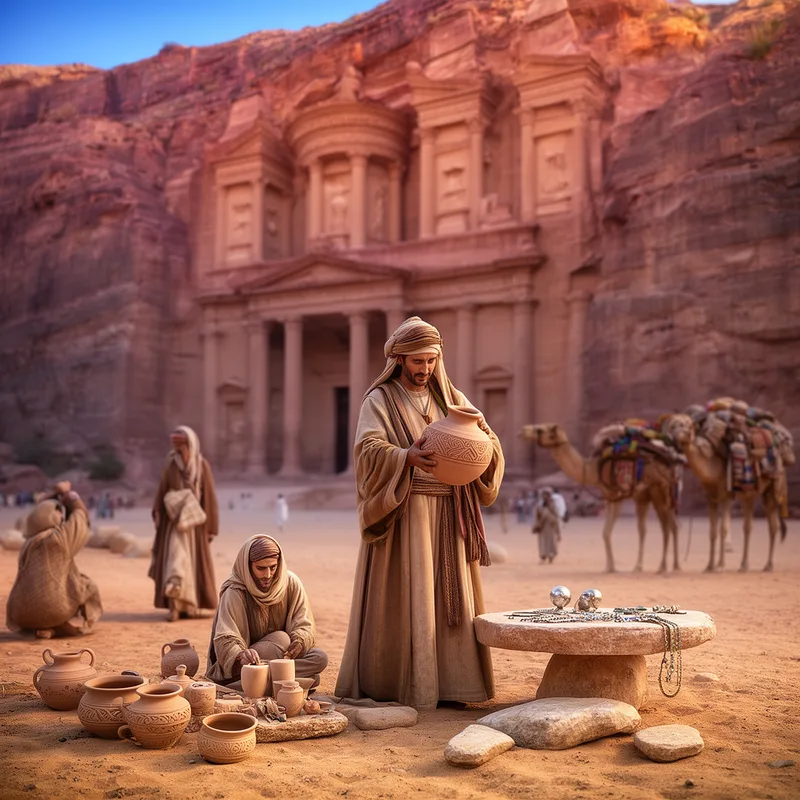
Nabataean


 1
9.9
- adjective
- /ˌnæbəˈtiːən/
- Roman Emperor Trajan annexed the Nabataean Kingdom in 106 CE, making it part of the Roman Province of Arabia.
Examples
-
At Khirbet Tannur, a Nabataean stele was found that was dedicated to a god called Qos-Allah.
-
Roman Emperor Trajan annexed the Nabataean Kingdom in 106 CE, making it part of the Roman Province of Arabia.
Academic text (2008) -
The elaborately carved facade depicts Nabataean gods, goddesses, and mythological figures.
Academic text (2000) -
In part of this period, the Nabataean Kingdom spread from the Arabian Peninsula in the south to Damascus in the north before being subjugated by the Romans, then eclipsed by the Byzantines, and finally dispersed onto the back lot of history.
Academic text (2000) -
The elaborately carved facade depicts Nabataean gods, goddesses, and mythological figures.
Synonyms
 1
9.9
Relating to the ancient Arab people who built Petra
Surface Forms
Etymology
Nabataean comes from the name of an ancient Arab people, the Nabataeans, who built the famous rock city of Petra and controlled desert trade routes. The ending -ean is like in European and means 'from' or 'relating to', so Nabataean as an adjective means 'from or connected to the Nabataeans'.