

Nabalus serpentarius
- noun
- Specialized
- The thick basal leaves of Nabalus serpentarius are said to resemble a lion’s foot.
Examples
-
Many botanists still refer to Nabalus serpentarius by its older genus name, Prenanthes.
-
The Nabalus serpentarius is often found in moist, wooded areas.
-
Nabalus serpentarius is commonly found in open woodlands throughout the southeastern United States.
-
Look at the Nabalus serpentarius!
-
Nabalus serpentarius produces beautiful pinkish flowers that attract various pollinators in summer.
-
In spring, the leaves of Nabalus serpentarius emerge as large, thick formations resembling a lion's foot.
-
Nabalus serpentarius is frequently used in traditional medicine by native herbalists in the southeastern United States.
Synonyms

A plant that lives for many years with thick leaves shaped like a lion's paw and drooping pink flowers
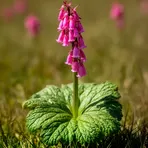
A plant that lives for several years with drooping clusters of pink flowers and broad leaves like a lion's paw

A wild plant with drooping pink or purple flowers and broad lobed leaves
Surface Forms
Morphology
Nabalus + serpentarius
This is a Latin binomial (scientific species name) functioning as a proper noun rather than a compositional English phrase; knowing 'Nabalus' only gives the genus (a perennial herb) and 'serpentarius' has no dictionary entry, so a B1 learner cannot infer the specific meaning. Scientific names are arbitrary labels and not built from everyday English words in a predictable way, making the expression non-compositional for learners.
Etymology
The plant name Nabalus serpentarius may come from the Latin parts Nabalus, the plant name, and serpentarius, meaning 'snake', because the long, drooping flower stems can look like a snake. That's why this name helps you remember a woodland herb with thick basal leaves that many people say look like a 'lion's foot'.

