
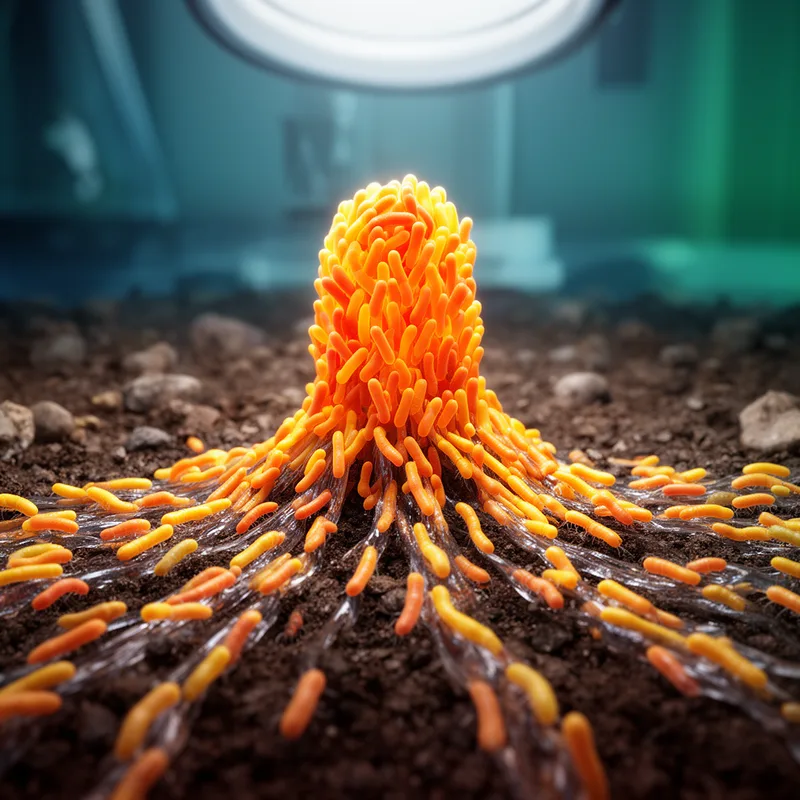
Myxobacterales
- noun
- /mɪksoʊbɑːkˈtɛrəliz/
- Specialized
- Members of Myxobacterales often exhibit coordinated movement and form complex fruiting bodies.
Examples
-
Soil samples revealed several new species belonging to the Myxobacterales order.
-
The Myxobacterales are fascinating due to their unique life cycles.
-
Scientists study Myxobacterales to better understand the diversity and evolution of bacteria.
-
Did you know that Myxobacterales can form fruiting bodies?
-
Members of Myxobacterales often exhibit coordinated movement and form complex fruiting bodies.
-
Scientists study Myxobacterales to better understand their intricate life cycles and unique evolutionary history.
-
Soil samples revealed several new species belonging to the Myxobacterales order, showcasing their diversity in various environments.
Synonyms

A group of soil bacteria that move by gliding and form fruiting bodies

A group of bacteria that move together and form fruiting bodies

A group of bacteria that live and move together and make fruiting bodies

A group of bacteria that move together and form fruiting bodies

Bacteria that make slimy groups and live in wet soil or rotting plants
Compounds
- Specialized
A group of bacteria that live and move together and make fruiting bodies
Surface Forms
Morphology
Myxobacterales = bacteria (opaque) = myxo + bacter + ales
The form uses Greek combining stems and the specialized taxonomic suffix '-ales', which are technical and not transparently interpretable by average learners.
Etymology
Myxobacterales is built from myxo- meaning 'slime', bacter- meaning 'bacteria', and the ending -ales that marks an 'order' or group of living things. So the name literally says 'a group of slime bacteria', which fits because these bacteria move together and form complex fruiting bodies.

