
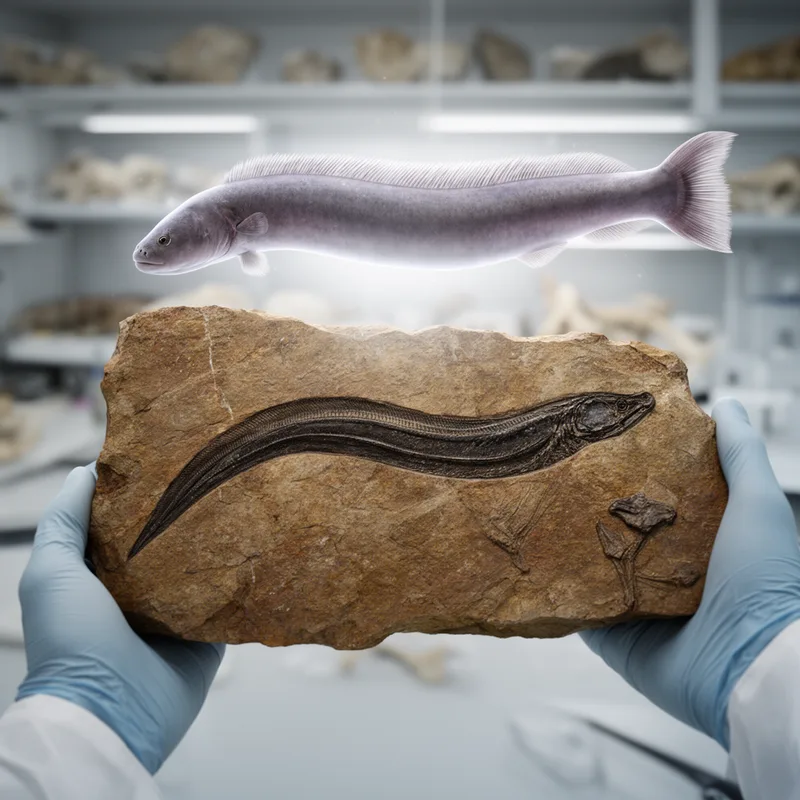
Myxinikela
- noun
- Specialized
- The discovery of Myxinikela fossils has provided new insights into early vertebrate evolution.
Examples
-
The ancient remains of Myxinikela were found in a Devonian rock formation.
-
Researchers identified Myxinikela as one of the earliest known hagfish genera.
-
The Myxinikela fossils provide insight into ancient marine life.
-
The Myxinikela lived during the Cambrian period.
-
Researchers identified Myxinikela as one of the earliest known hagfish genera from ancient fossil records.
-
The ancient remains of Myxinikela were found in a Devonian rock formation, shedding light on prehistoric marine ecosystems.
-
The discovery of Myxinikela fossils has provided important insights into the evolution of early vertebrates.
Compounds
- Specialized
A fish without jaws that lived about 300 million years ago and resembles modern hagfish
Surface Forms
Etymology
Myxinikela comes from the Greek root myx- meaning 'slime' or 'mucus', the same root you see in Myxine, the living hagfish name. So the name points to a slimy, hagfish-like creature, which helps explain why it is used for an extinct genus of hagfishes.

