
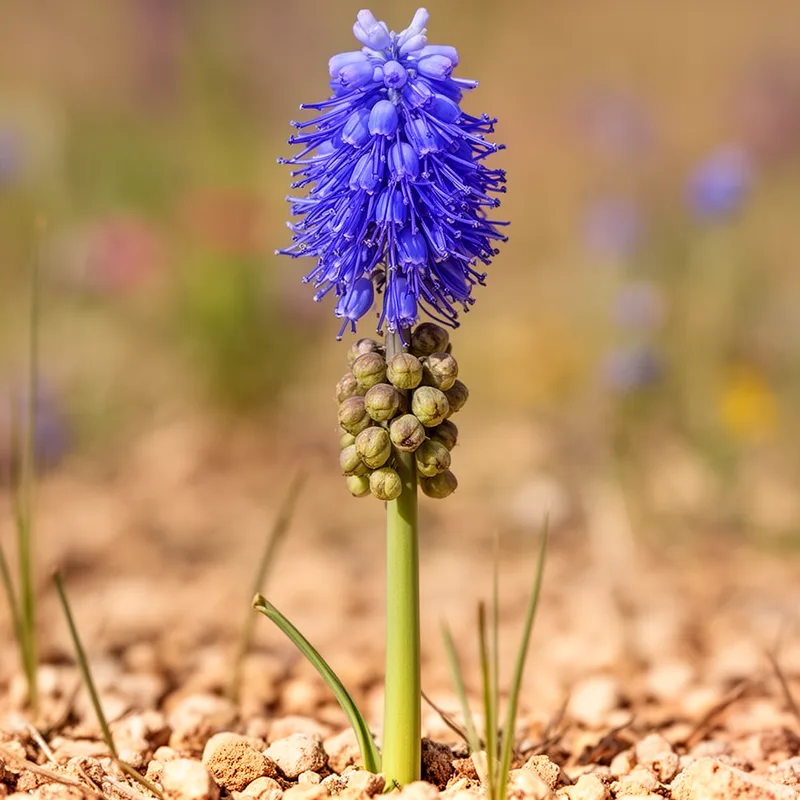
Muscari comosum
- noun
- Specialized
- Muscari comosum blooms in late spring with elegant tassel-like flowers.
Examples
-
Gardeners often plant Muscari comosum for its vivid bluish-violet display.
-
Muscari comosum is known for its distinctive tuft of bluish-violet flowers that stand out in any garden.
-
The unique structure of Muscari comosum makes it a favorite among Mediterranean wildflowers enthusiasts.
-
The Muscari comosum blooms in early spring.
-
Have you seen the Muscari comosum in the garden?
-
Many people admire Muscari comosum for its beautiful and elegant blooms during the spring season.
-
Muscari comosum, commonly called tassel hyacinth, thrives in sunny Mediterranean gardens.
Synonyms
A Mediterranean plant with a top group of blue-violet flowers above other flowers
Surface Forms
Morphology
Muscari + comosum
This is a botanical Latin binomial (genus + specific epithet), so if a learner knows 'Muscari' (a bulbous plant) and the Latin-derived epithet 'comosum' (meaning tufted/with a tuft), the overall meaning is compositionally derivable as a tufted Muscari (tassel hyacinth). The form follows transparent noun + descriptive adjective morphology rather than an idiomatic shift, though the epithet is not a common English word and transparency depends on knowing the Latin descriptor.
Etymology
Muscari comosum may come from old Greek words: Muscari from a word for 'musk' (a sweet smell some related plants have) and comosum from a word for 'hair' or 'tassel', because this species has a little tuft of flowers that looks like a small tassel above the others, so the name points to its scent and its tassel-like top.

