
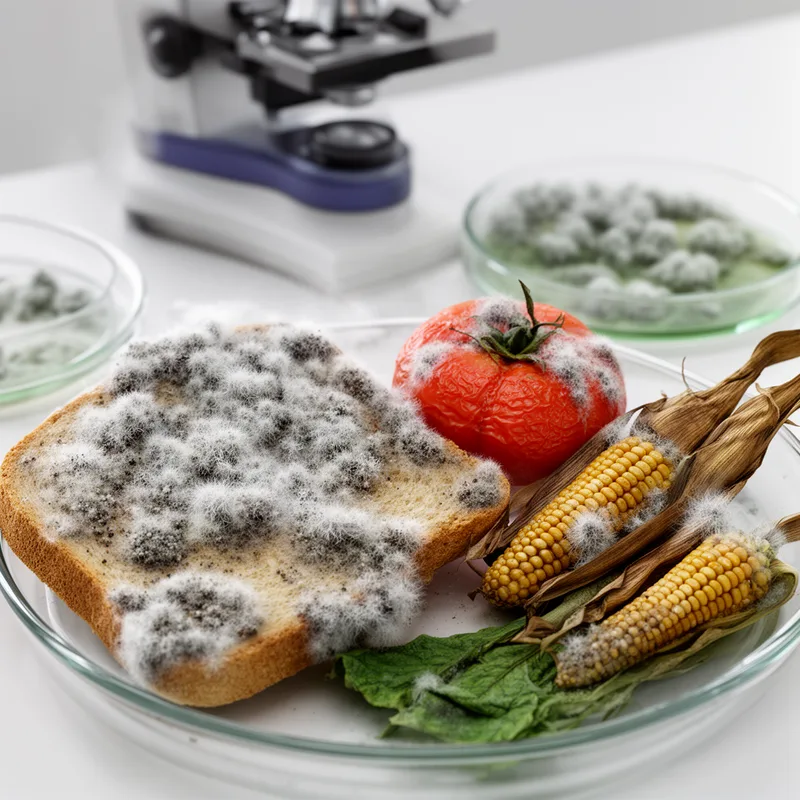
Mucoraceae
- noun
- /mjuːˈkɔːr.eɪ.siː/
- Specialized
- Most pathogenic species are members of the family Mucoraceae, which includes the genera Absidia, Mucor, Rhizomucor, and Rhizopus.
- the Mucoraceae family
Examples
-
The causative organisms are members of the family Mucoraceae, which belongs to the order Mucorales of the class Zygomycetes.
Academic text (2004) -
Mucormycosis is an opportunistic infection caused by fungi of the family Mucoraceae.
Academic text (1995) -
Many common molds that spoil food belong to the family Mucoraceae.
-
Researchers study the effects of Mucoraceae fungi on food preservation.
-
The family Mucoraceae contains several species that can cause food spoilage.
Synonyms

A group of molds that grow on dead plants and spoil food
Surface Forms
Morphology
Mucoraceae = Mucor (opaque) = Mucor + aceae
Formation is a standard taxonomic suffixation (genus name + -aceae) but the term is technical and not interpretable by an average B1 learner without knowledge of biological nomenclature.
Etymology
The word Mucoraceae names a family of molds. It comes from Mucor, a Latin word like the English mucus that means 'slime', plus the ending -aceae that means 'family', so the name points to a group of slimy molds that often spoil food.

