
Mozambican
 1
5.6

- adjective
- /moʊˈzæmbɪkən/
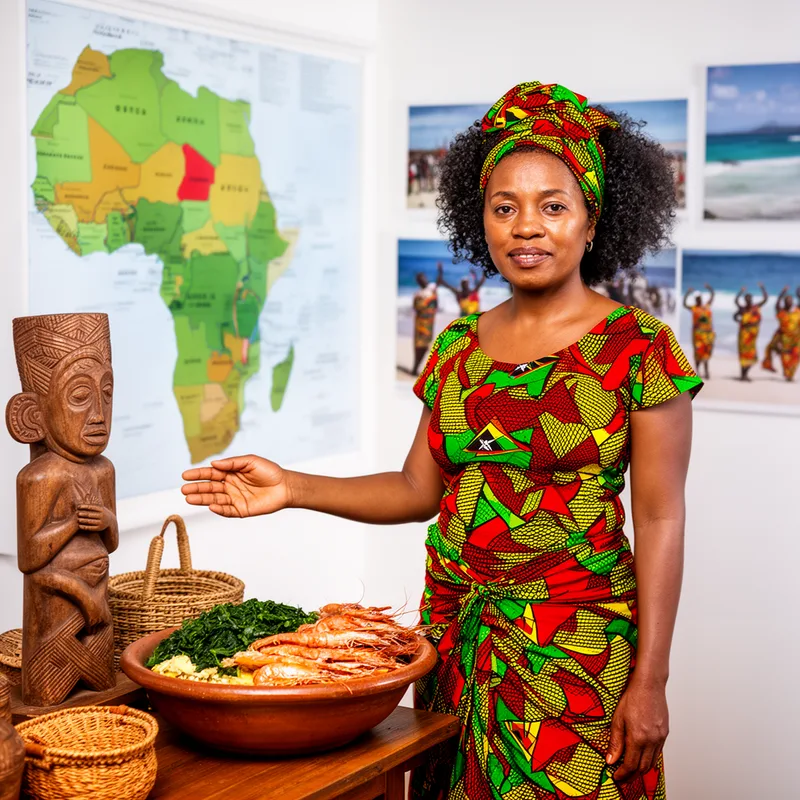
- Mozambican cuisine features dishes like matapa, which is made from cassava leaves and peanuts.
Examples
-
Since then, AID has provided some money to the Mozambican government for health care services.
Academic text (1992) -
A project linking Boston-area youth with Mozambican young people is also planned.
Academic text (1992) -
My colleagues want assistance in teaching subjects closer to home, specifically Mozambican and Southern African studies.
Academic text (1998) -
Renamo began to be a serious threat to the Mozambican government.
Academic text (1992) -
There is a special Mondlane place in the hearts and minds of the Mozambican people throughout the country.
Academic text (1992) -
In addition, the Mozambican leadership is negotiating an end to the devastating war of destabilization.
Academic text (1992) -
By 1987, the Mozambican government was desperate and had little choice but to turn to the IMF.
Academic text (1992) -
While millions of Mozambicans wait despairingly for peace, Mozambican society is undergoing profound change.
Academic text (1992) -
Antonio Matonse is a Mozambican diplomat residing in Washington, D.C.
Academic text (1992) -
Collection of M. Shah, Mombasa, Kenya. The Mozambican nationalist organization FRELIMO actively supported the work of Makonde carvers.
Academic text (2002)
Surface Forms
Morphology
Mozambican = Mozambique (transparent) = Mozambique + an
The adjective is directly formed from the country name with the regular demonym/adjectival suffix '-an', so meaning is straightforward.
Etymology
Mozambican comes from the country name Mozambique plus the English ending -an that makes words mean 'from' a place, like Canadian, so Mozambican describes something 'relating to Mozambique', such as its people, language, or culture.