
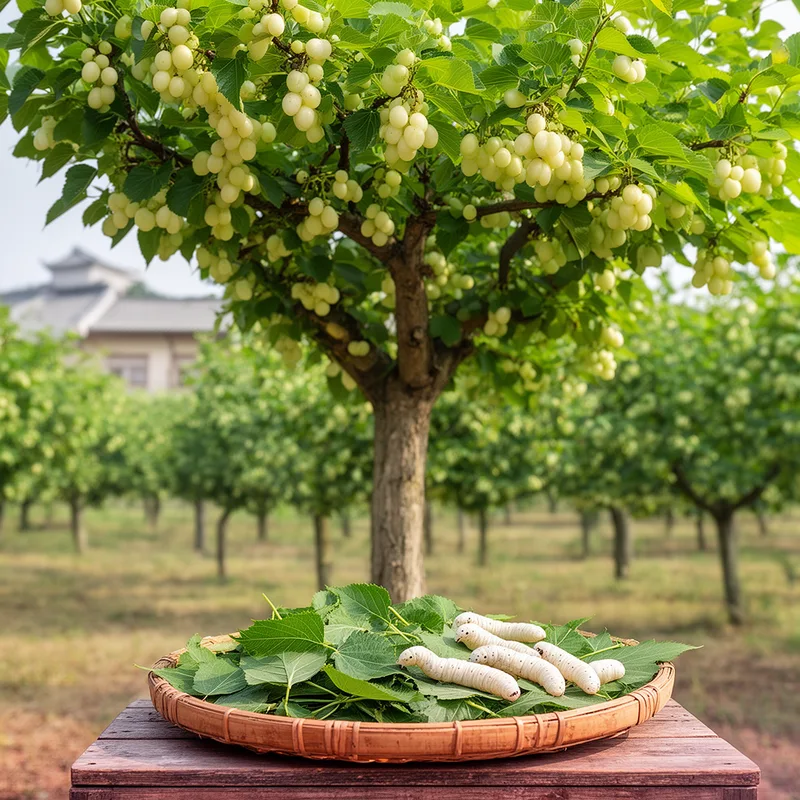
Morus alba
- noun
- Specialized
- The leaves of Morus alba are essential for raising healthy silkworms.
Examples
-
Farmers in China cultivate Morus alba for silkworms.
-
The Morus alba tree produces sweet, edible fruit.
-
Orchards of Morus alba thrive in temperate regions of Asia.
-
Some herbal remedies use the dried fruit of Morus alba for medicinal purposes.
-
The leaves of Morus alba are commonly used to feed silkworms in sericulture.
-
Orchards of Morus alba can be found across various temperate regions in Asia.
-
In addition to feeding silkworms, the fruit of Morus alba can be enjoyed fresh.
Synonyms

A tree from Asia with leaves that feed silkworms and white or pale red fruit
Surface Forms
Morphology
Morus + alba
This is a compositional Latin binomial: 'Morus' names the mulberry genus and 'alba' (Latin for 'white') specifies the species, so the overall meaning 'white mulberry' is directly derivable from the parts. Botanical naming conventions make this pattern predictable across languages, so a learner who knows both constituents would readily infer the MWE's meaning.
Etymology
Morus alba comes from Latin words: Morus meaning 'mulberry' and alba meaning 'white'. The name gives a simple picture of a pale mulberry tree with light fruit and leaves used to feed silkworms, and that's why it refers to this species.

