

Moreton Bay chestnut
- noun
- Australian
- The Moreton Bay chestnut tree grows tall and produces large pods filled with seeds that resemble chestnuts.
Examples
-
The timber from the Moreton Bay chestnut is highly valued for furniture and construction due to its strength.
-
The Moreton Bay chestnut is popular in Australian parks for its shade and ornamental pods.
-
Aboriginal people traditionally used the seeds of the Moreton Bay chestnut after careful preparation to remove toxins.
-
The Moreton Bay chestnut tree is native to Australia.
-
I saw a beautiful Moreton Bay chestnut in the park.
-
In many cities, the Moreton Bay chestnut is planted for its shade and attractive flowers.
-
Craftsmen often use the dark wood of the Moreton Bay chestnut for making durable furniture.
Synonyms

A tall Australian tree with orange-yellow flowers and large pods that contain edible seeds like chestnuts
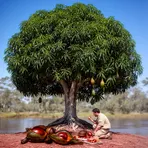
A large Australian tree known as the Moreton Bay chestnut
Surface Forms
Morphology
Moreton + Bay + chestnut
The name is compositionally a place-name + noun (Moreton Bay + chestnut), so a learner who knows the constituents can infer it refers to a type of chestnut/tree associated with the Moreton Bay area. While the specific botanical details are not predictable from the parts, the basic meaning 'a chestnut tree from Moreton Bay or named for that region' is directly derivable following common cross-linguistic naming patterns.
Etymology
Moreton Bay chestnut may get its name from where the tree grows—around Moreton Bay in Australia—and from its large seeds that look like chestnuts. That's why the name points to a tree with chestnut-like seeds and strong wood used for shade and furniture, even though it is 'not a true chestnut'.

