
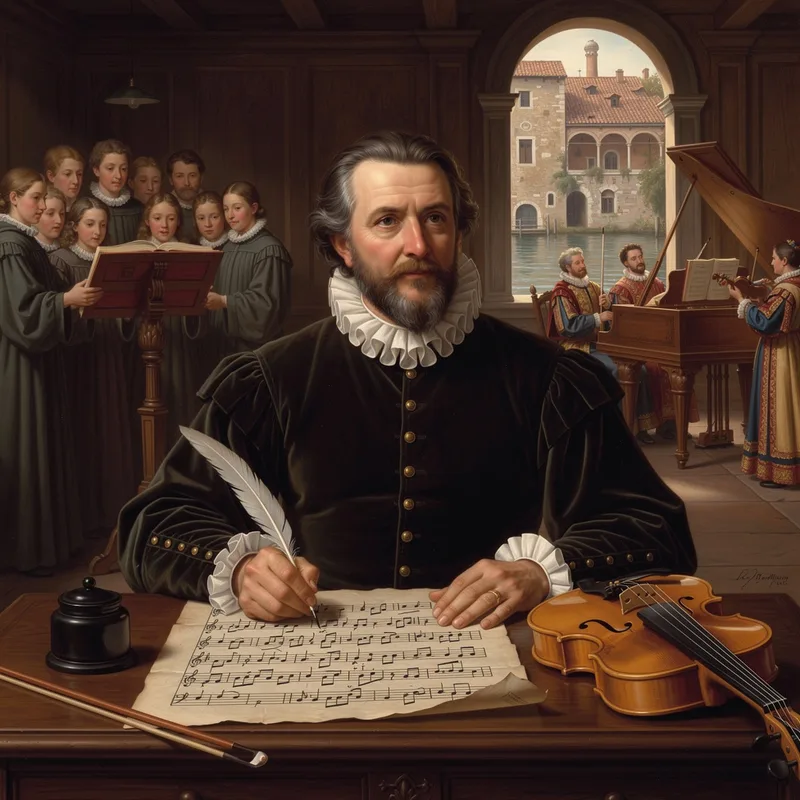
Monteverdi
 1
9.3

- proper noun
- /ˌmɒntəˈvɜrdi/
- In the '70s, Opera America companies offered 10 productions of Monteverdi's three surviving operas.
- Monteverdi's Orfeo
- Monteverdi's opera
- Monteverdi's Vespers
Examples
-
Excuse me, are you talking about Monteverdi?
-
In comparison with the pop music of today, the Beatles almost do seem like Monteverdi.
Academic text (1999) -
The idea is as old as the mystery plays of the Middle Ages or the first operas: in Monteverdi's Orfeo of 1607, "Music" literally walks on the stage for all to see.
Academic text (1997) -
Did you know that at Carol Monteverdi's wedding... he got drunk and he punched the deejay in the face... because the guy wouldn't play "Rock Me, Amadeus"?
-
Monteverdi's librettist Alessandro Striggio straightforwardly makes this point in the first act of "Orfeo":
Blog text (24) -
The three ensembles Gardiner founded—the English Baroque Soloists, in addition to the ORR and Monteverdi Choir—operate in an unusual fashion.
Blog text (4) -
Yet practically the entire repertory of art songs, from Monteverdi to Berio, consists of lyrics by men set to music by men.
Synonyms


 1
7.9
An Italian composer who marks the change from Renaissance to Baroque music
Surface Forms
Etymology
Monteverdi is an Italian family name made of monte 'mountain' and verdi 'green', so it literally means 'green mountain'. Thinking of a 'green mountain' is an easy way to remember the Italian composer Monteverdi, who helped music move from the Renaissance into the Baroque period.