
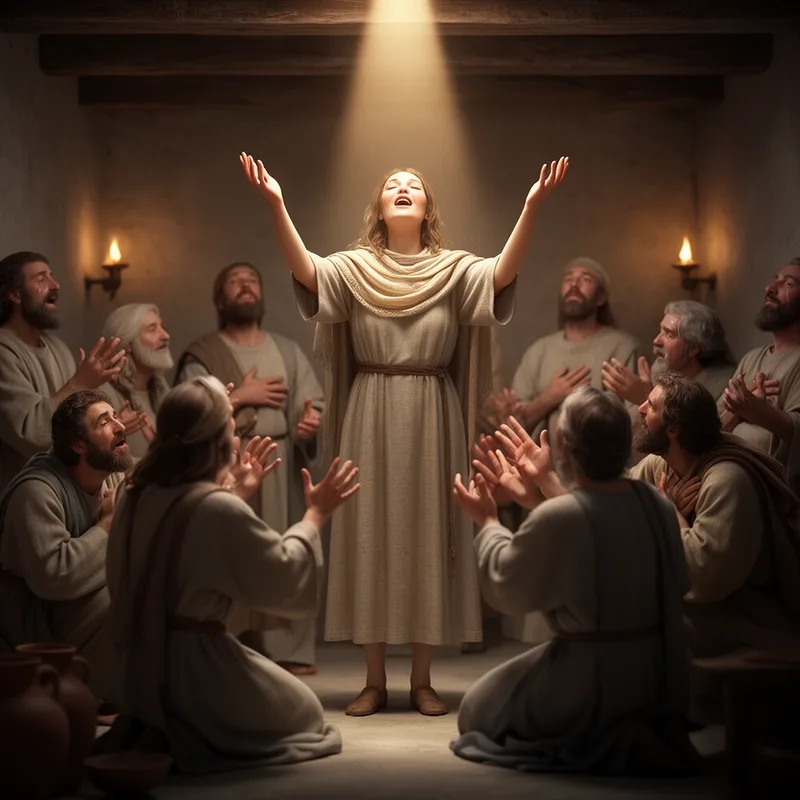
Montanist


 1
9.9
- adjective
- /mɒnˈteɪnɪst/
- Formal
- Her beliefs were influenced by Montanist teachings about prophecy and spiritual gifts.
Examples
-
Some scholars debate whether the ecstatic visions were truly Montanist in origin.
-
The church's rituals were considered Montanist by mainstream Christian leaders of the time.
-
The Montanist movement was known for its emphasis on prophecy.
-
Many early Christians viewed the Montanist practices as controversial.
-
The church's rituals were considered Montanist due to their emphasis on ecstatic prophecy.
-
Many early Christians viewed the Montanist practices as unorthodox because of their focus on individual revelations.
-
Her beliefs were influenced by Montanist teachings that emphasized the importance of prophetic gifts.
Surface Forms
Morphology
Montanist = Montanism (transparent) = Montan + ist
Regular formation from the movement name 'Montanism' plus the productive suffix '-ist' meaning 'adherent' or 'relating to', so the relation is clear if the base is known.
Etymology
Montanist comes from the name of an early Christian prophet, Montanus, and the root mont- means 'mountain', like the English word mountain. So Montanist describes beliefs or rituals linked to Montanus, especially their strong prophetic and often emotional style of worship.