
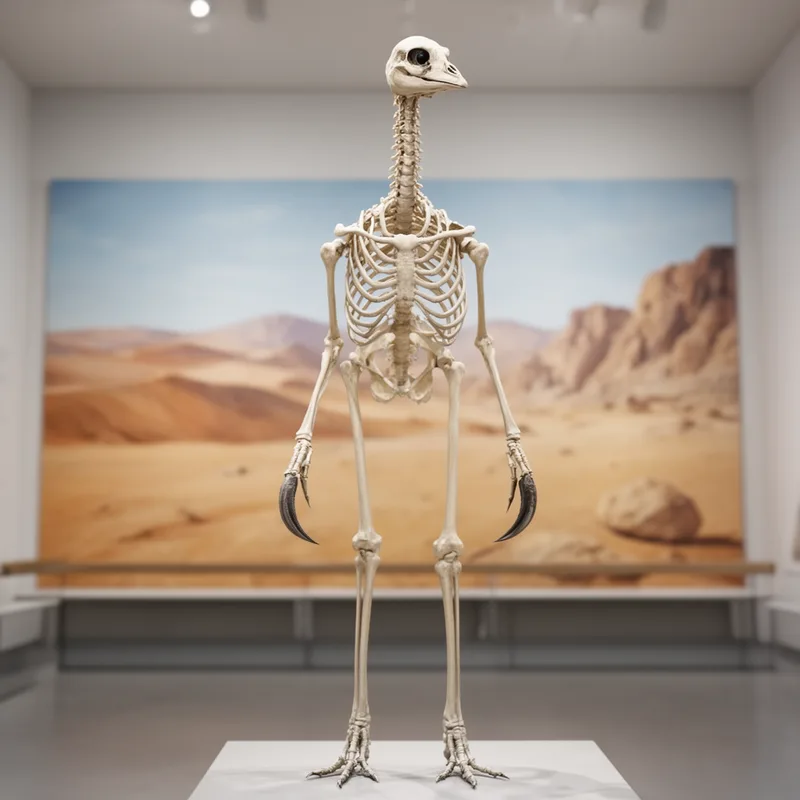
Mononychus olecranus
- noun
- Specialized
- Scientists believe that Mononychus olecranus had bird-like features.
Examples
-
The unusual anatomy of Mononychus olecranus has puzzled paleontologists regarding its place in evolutionary history.
-
Scientists discovered a Mononychus olecranus fossil in the Gobi Desert in 1993.
-
A mounted skeleton of Mononychus olecranus is now displayed at the national natural history museum.
-
The Mononychus olecranus was a unique dinosaur from the Late Cretaceous.
-
A mounted skeleton of Mononychus olecranus is now displayed at the national natural history museum.
-
Scientists discovered a Mononychus olecranus fossil in the Gobi Desert in 1993.
-
The unusual anatomy of Mononychus olecranus highlights its unique adaptations and fosters debate among paleontologists.
Surface Forms
Morphology
Mononychus + olecranus
This is a Latin binomial (a taxonomic species name) composed of non‑English roots that are not recognized dictionary words; a B1 learner who 'knows' the listed constituents (which are marked as not found) will not be able to infer the detailed meaning (an extinct turkey‑sized, long‑legged animal) from them. Scientific names function as arbitrary labels requiring specialist knowledge, so the composition does not transparently convey the MWE's meaning to general learners.
Etymology
Mononychus olecranus comes from old Greek words: mono- meaning 'one', -onychus meaning 'claw', and olecranus meaning 'elbow'. Scientists gave this name because the animal had short front limbs with a single large claw and a clear elbow, so the name helps us picture its one-clawed forelimbs.

