
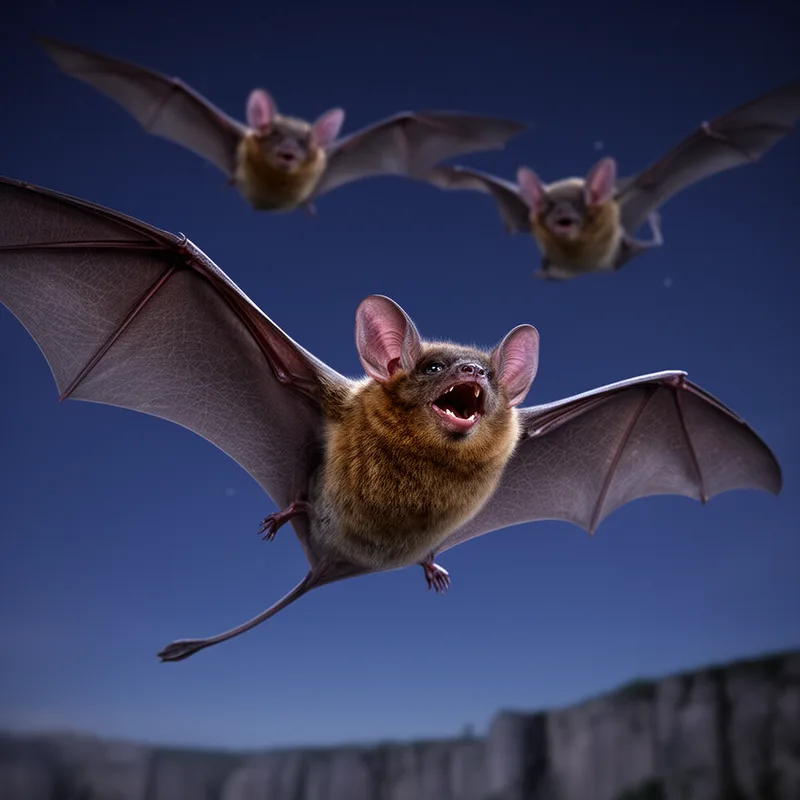
Molossidae
- noun
- /məˈlɑːsɪˌdeɪ/
- Specialized
- Many Molossidae species have robust bodies and long tails that extend beyond their tail membranes.
Examples
-
Scientists discovered a new species within the Molossidae family in South America.
-
The Molossidae are known for their swift flight and loud vocalizations.
-
Many Molossidae species have large, forward-facing ears and a distinctive tail.
-
The Molossidae family includes several species of bats.
-
Many researchers study the Molossidae for their unique adaptations.
-
In tropical regions, the Molossidae family of bats plays a crucial role in controlling insect populations.
-
The research on Molossidae has revealed their distinctive flying patterns and vocalizations.
Synonyms


 1
8.5
1
8.5
A small bat that flies fast, eats insects, and has a tail sticking out past the skin between its wings
Surface Forms
Morphology
Molossidae = Molossus (opaque) = Moloss + idae
Formed with the technical taxonomic suffix '-idae' attached to a Latinized genus stem; this construction is specialist and not derivable by an average B1 learner.
Etymology
The word Molossidae comes from the old Greek name Molossus, a strong, big dog, plus the ending -idae, which means 'family' in animal names. People named these bats after the dog because they are sturdy and powerful like a mastiff, so Molossidae is the 'mastiff' family of bats.