
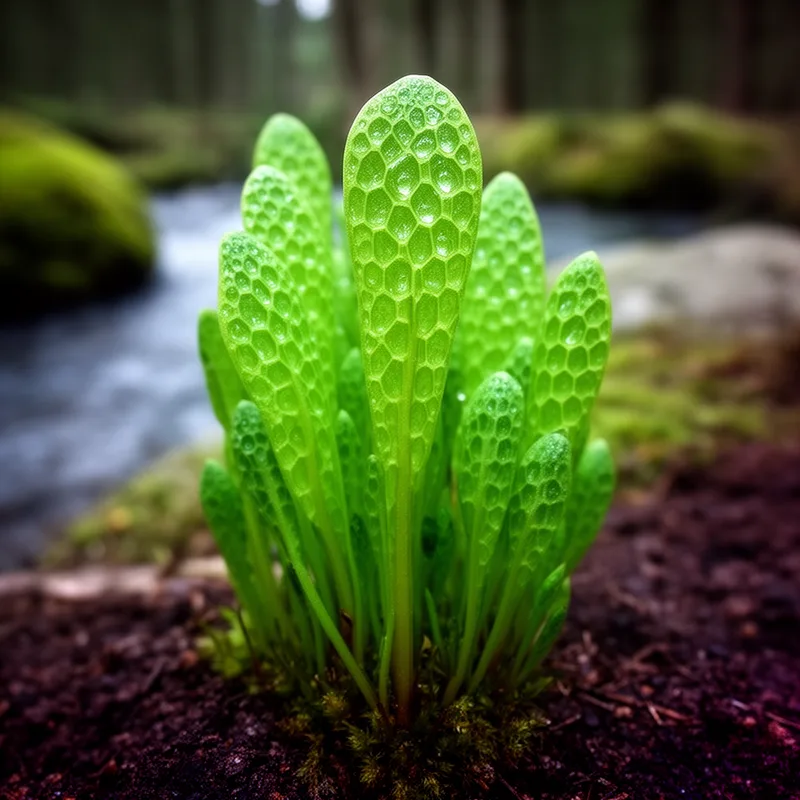
Mniaceae
- noun
- Specialized
- Botanists distinguish Mniaceae from other moss families by their hexagonal leaf cells and club-shaped paraphyses.
Examples
-
Many forests in the Northern Hemisphere are home to mosses belonging to the Mniaceae family.
-
The species in Mniaceae are often found in moist, shaded habitats near streams and wetlands.
-
The Mniaceae family includes various species of mosses.
-
Did you know that Mniaceae are often found in damp environments?
-
Botanists distinguish Mniaceae from other moss families by their hexagonal leaf cells and club-shaped paraphyses.
-
Many forests in the Northern Hemisphere are home to mosses belonging to the Mniaceae family.
-
The species in Mniaceae are often found in moist, shaded habitats near streams and wetlands.
Synonyms
A group of moss plants with club-shaped hairs and six-sided cells on leaf surfaces
Compounds
- Specialized
A group of moss plants with club-shaped hairs and six-sided cells on leaf surfaces
Surface Forms
Morphology
Mniaceae = Mnium (opaque) = Mni + aceae
The formation uses the Latin botanical family suffix '-aceae' attached to the genus stem; this taxonomic convention is specialized and not inferable by a B1 learner.
Etymology
Mniaceae comes from the plant name Mnium, a Latin name for a group of mosses, and the ending -aceae, which means 'family' in plant names. So Mniaceae literally means the 'family' of Mnium and is used for this group of mosses.

