
Mixolydian
- noun
- /ˌmɪksoʊˈlɪdiən/
- Specialized
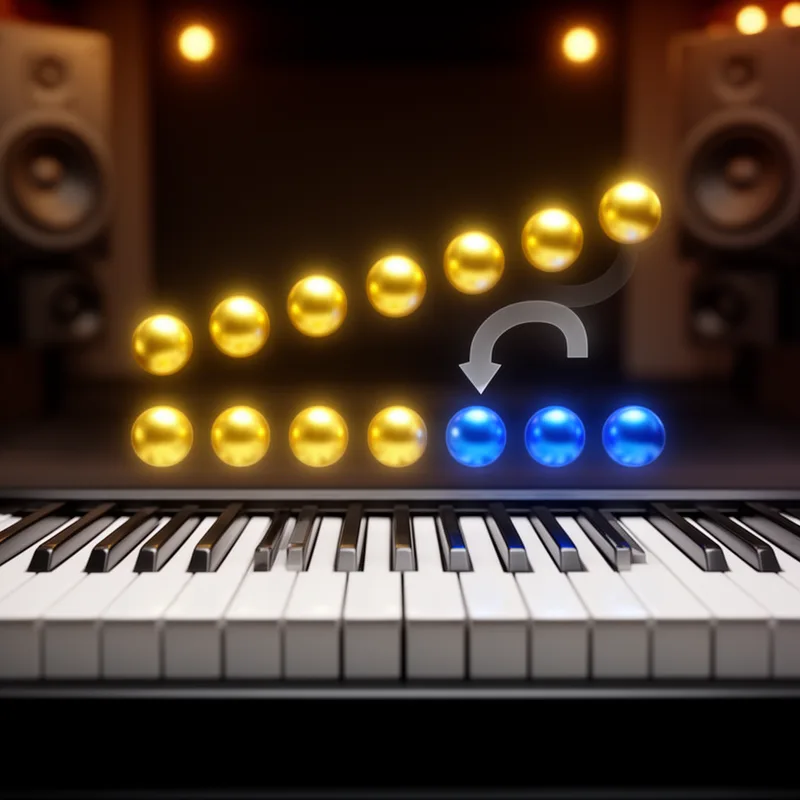
- The Mixolydian scale is often used in jazz and folk music, characterized by its lowered seventh note.
- Mixolydian mode
Examples
-
When working on Mixolydian modes in scale practice, the jam portion can include the exercises and tunes from volume 2 of The Art of Improvisation.
Academic text (1994) -
OK, let me go from F mixolydian to G Phrygian.
-
The next thing to be added to the scale component of the practice routine is the Mixolydian mode in all keys.
Academic text (1994) -
The director can also assign E, G-sharp, and D, which gives them the starting materials for E mixolydian.
Academic text (2014) -
Two of the modes that work well to begin are Phrygian and Ionian, and then Mixolydian can be added as a third mode.
Academic text (2009) -
As in the case of the Dorian mode, it is best that the functional sound of the Mixolydian be understood in terms of its harmonic relationship to a progression by practicing with a recording.
Academic text (1994) -
Students echo, improvise, and read tonal patterns in major, minor, and other tonalities, such as Dorian and Mixolydian.
Academic text (1999) -
On the contrary, Dorian, Phrygian, Lydian, and Mixolydian modes are delightful musical sources for young learners, but such songs must become part of the students' familiar repertoire before they can be expected to understand these harmonic structures in a meaningful way.
Academic text (1997) -
Learning songs in other tonalities such as Dorian, e.g., "The Drunken Sailor," and Mixolydian, e.g., "Old Joe Clark," also contributes to the eventual development of improvisational skills.
Academic text (1999) -
In his lessons, the teacher explained how to play the Mixolydian mode on the guitar.
Surface Forms
Morphology
Mixolydian = Lydian (opaque) = mixo + lydian
The composition is etymologically regular but denotes a specialist musical scale; average learners cannot derive the precise musical meaning from the parts.
Etymology
Mixolydian comes from the Greek parts mixo- 'mixed' and Lydian 'a musical mode'. So the Mixolydian scale is a 'mixed Lydian' scale, which is why it sounds like a major scale but with the seventh note lowered and often feels bluesy or folk-like.

