
Mithras
 2
9.9
2
9.9

- proper noun
- Literature
- The first-ever depiction of people shaking hands in human history comes from a 4,000-year-old carving of Mithras shaking the hands of the Syrian King Antiochus.
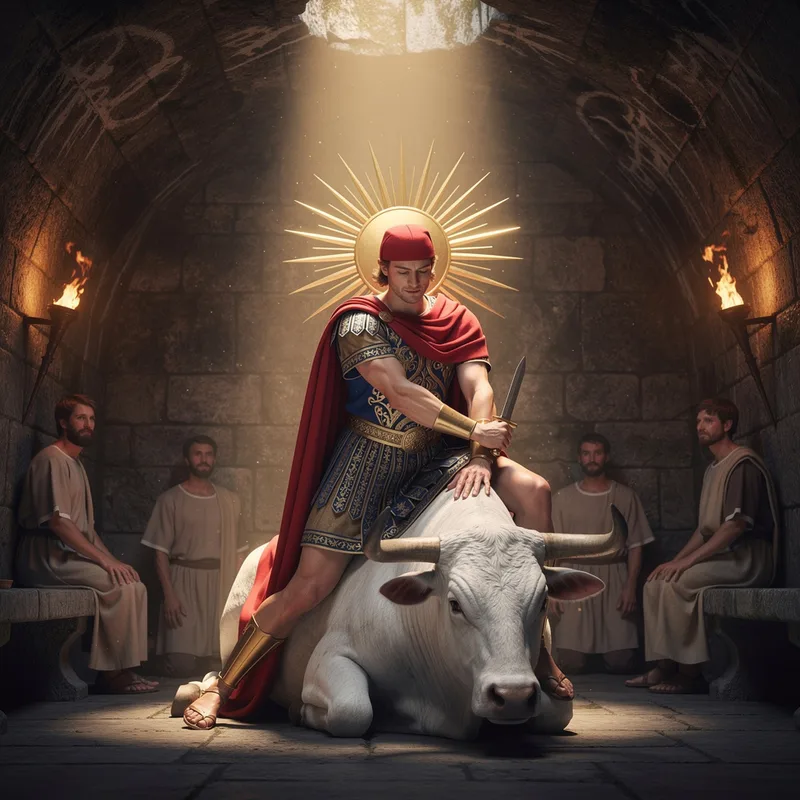
- Mithras, a Persian god
Loading YouTube…
Watch on YouTubeThe, the one to myth Mithras was another one, the one to Isis, the, the Egyptian goddess was another big one.
- The, the one to myth Mithras was another one, the one to Isis, the, the Egyptian goddess was another big one.
Examples
-
Inside the walls, Arthur liked the public baths and the Temple of Mithras best, deciding, as a warrior, that Mithras was the deity he should most honor.
Fiction book (1991) -
At first, she says she assumed the mosaics were part of a temple to Mithras, a Persian god popular with Roman troops from the empire's eastern frontier to Scotland.
Academic text (2007) -
The cult of Mithras was both an association and a religious cult focused on the worship of this god, Mithras.
-
Mithras was a deity that first appeared in Persia over 4,000 years ago.
-
The ancient Romans built temples to honor Mithras, the god of light and truth.
-
Archaeologists discovered artifacts related to the worship of Mithras in the ruins of an old temple.
-
Many soldiers in the Roman Empire worshipped Mithras, seeking his blessings for victory in battle.
Synonyms
 1
9.9
1
9.9
A god from ancient Persia who represents light, truth and the sun
Surface Forms
Etymology
Mithras comes from the old Persian god Mithra, a name that meant 'friend' or 'agreement' (like the Sanskrit Mitra). Because he was seen as a trusted protector connected to the sun, Mithras came to be worshipped as a god of light and truth, which helps explain his role in the Roman world.