
Minotaur
 22
9.0

- noun
- /ˈmɪnəˌtɔr/
- Literature
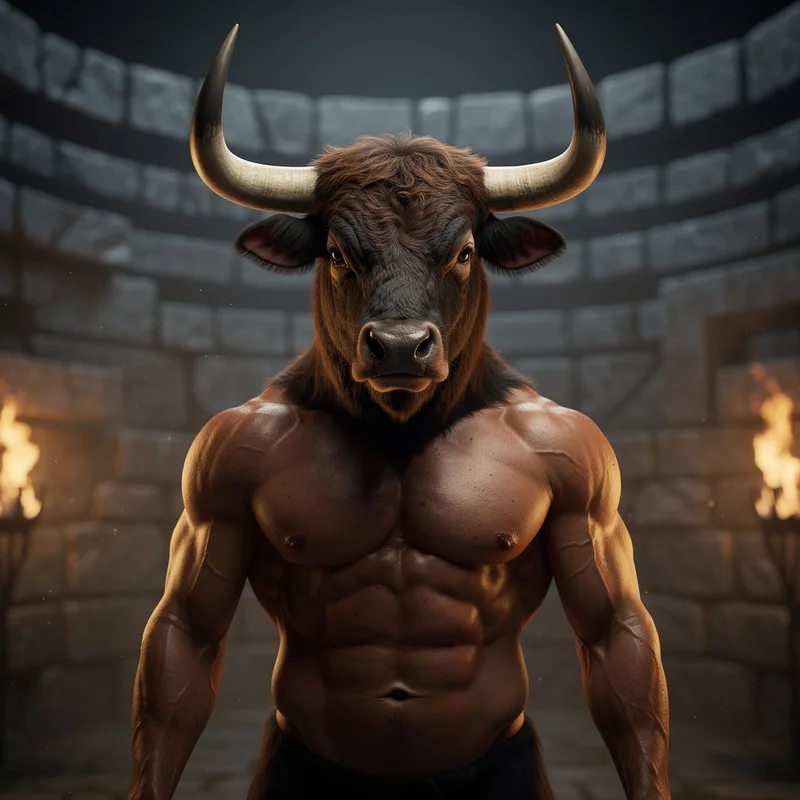
- The Minotaur, as Apollodorus said, had "the face of a bull, but the rest of him was human."
- Theseus and the Minotaur
- Minotaur in the labyrinth
Examples
-
Theseus is brave, but is he any match for the dreaded Minotaur?
Academic text (2011) -
The story of Theseus and the Minotaur is, of course, a well-trodden path with positive outcomes.
Academic text (2011) -
All right, so the Minotaur was a creature that was half bull and half human.
-
And our hero must face the Minotaur before he escapes the maze.
-
Here, a torso-length portrait of the Minotaur, rendered in gray, black, and white, already occupies this square area.
Academic text (2011) -
The Minotaur, at the center, must be mastered just as the labyrinth has been mastered.
Academic text (2011) -
She helped Theseus to escape from the maze of the Minotaur.
-
In Greek mythology, the Minotaur is depicted as a creature with the head of a bull and the body of a man.
-
Theseus bravely confronted the Minotaur in the labyrinth to save the captured Athenians.
-
The legend tells how the Minotaur was eventually slain by the hero Theseus.
Surface Forms
Etymology
Minotaur comes from the name Minos, a king of Crete, and taurus meaning 'bull', the same root you see in the zodiac sign Taurus. So a Minotaur is literally the 'bull of Minos', which explains why the creature in the stories has a bull's head and a man's body and lives in a maze.