
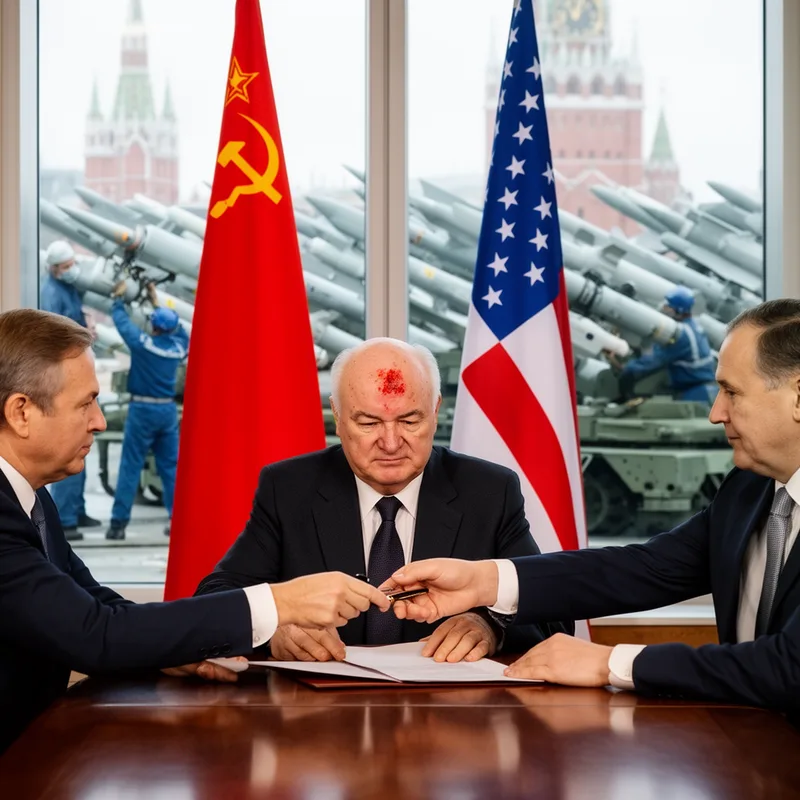
Mikhail Sergeyevich Gorbachev


 1
8.1
- proper noun
- /mɪˈkaɪl sɪrˈɡeɪvɪtʃ ˈɡɔrbəˌtʃɛf/
- Mikhail Sergeyevich Gorbachev played a pivotal role in ending the Cold War through his policy of openness and reform.
Examples
-
In 1985, Mikhail Sergeyevich Gorbachev became the General Secretary of the Soviet Communist Party.
-
Mikhail Sergeyevich Gorbachev played a crucial role in ending the Cold War.
-
Many historians credit Mikhail Sergeyevich Gorbachev with initiating political and economic changes that led to the dissolution of the Soviet Union.
-
The reforms introduced by Mikhail Sergeyevich Gorbachev changed the course of history.
-
Mikhail Sergeyevich Gorbachev was instrumental in implementing policies that led to the end of the Cold War.
-
The leadership of Mikhail Sergeyevich Gorbachev marked a significant turning point in Soviet history.
-
Many citizens remember Mikhail Sergeyevich Gorbachev for his efforts to introduce reform in the Soviet Union.
Synonyms
 334
6.5
A Soviet leader who led the Soviet Union from 1985 to 1991 and helped end the Cold War
Surface Forms
Morphology
Mikhail + Sergeyevich + Gorbachev
This is a full personal name referring to a specific historical individual; its meaning is referential (identity and biographical facts) rather than compositional. Knowing the constituent name parts does not allow a B1 learner to infer that this person was the last leader of the Soviet Union or introduced major reforms, so the expression is not transparently derived from its parts.
Etymology
Mikhail Sergeyevich Gorbachev was the last leader of the Soviet Union and is best remembered for two reform ideas, 'glasnost' meaning more openness and 'perestroika' meaning rebuilding the economy. By opening the country and changing how it worked, he helped end the Cold War, so his name is now linked to those big changes.