
Micrococcaceae
- noun
- /ˌmaɪkroʊˈkɑːkɪˌsiː/
- Specialized
- The genus Micrococcus, which belongs to the Micrococcaceae family, is commonly found on human skin.
Examples
-
The genus Micrococcus, belonging to the Micrococcaceae family, is commonly found on human skin.
-
Researchers identified a novel strain within the Micrococcaceae that produces an unusual red pigment.
-
Some members of the Micrococcaceae are used in microbiology as indicators of air quality.
-
The Micrococcaceae family includes various bacteria.
-
Some species of Micrococcaceae can cause infections.
-
Researchers identified a novel strain within the Micrococcaceae family that produces an unusual red pigment.
-
Some members of the Micrococcaceae family are used in microbiology as indicators of air quality.
Surface Forms
Morphology
Micrococcaceae = Micrococcus (semi-transparent) = micrococc + aceae
The name is formed by adding the technical taxonomic suffix '-aceae' to the genus stem; the biological family relationship is predictable for those familiar with scientific naming but is specialized for general learners.
Etymology
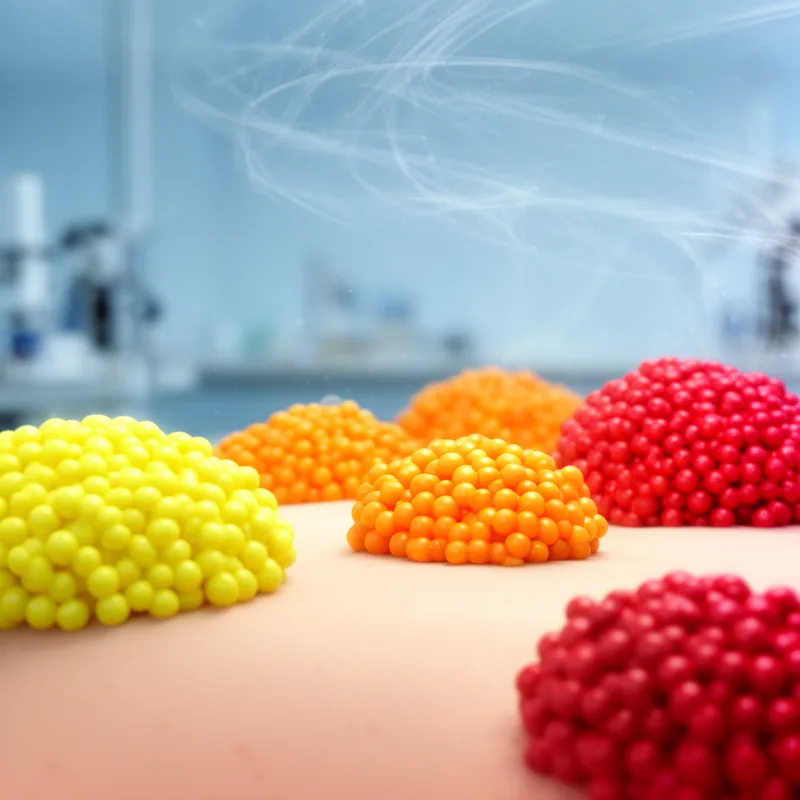
Micrococcaceae breaks into micro- 'small', coccus 'round' or 'berry', and -aceae 'family' in biology. So, Micrococcaceae literally names a 'family of small round' organisms, which fits because these are a group of small, usually round bacteria that often make yellow, orange, or red colors.

