
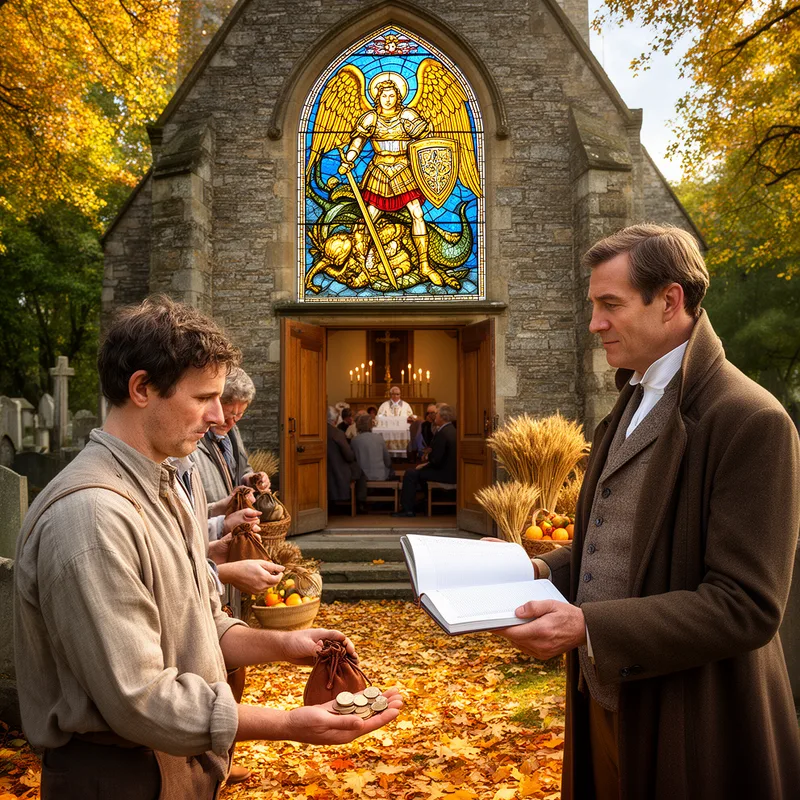
Michaelmas
- noun
- /ˈmaɪkəlməs/
- UK
- Rents for agricultural land in England were traditionally due at Michaelmas.
Examples
-
During Michaelmas, churches often dedicate special services to the archangel Michael.
-
Every year, the college holds a Michaelmas feast to mark the beginning of the academic term.
-
Many churches celebrate Michaelmas with special services.
-
On Michaelmas, we remember the archangel Michael.
-
Every year, the college holds a Michaelmas feast to mark the beginning of the academic term.
-
During Michaelmas, churches often dedicate special services to the archangel Michael.
-
Rents for agricultural land in England were traditionally due at Michaelmas.
Synonyms
A church feast day on September 29th celebrating the angel Michael
A church feast day in England, Wales, and Ireland celebrating the angel Michael and marking a traditional quarter day
Compounds

A garden plant with small purple, pink, or white flowers that bloom in autumn
Surface Forms
Morphology
Etymology
Michaelmas comes from the name Michael and mass meaning 'church service'. It began as the 'Mass of Michael' on September 29 to honour the angel Michael, and because that day was also a traditional time to pay rents, Michaelmas now means both the festival and the quarter day when payments were due.

