
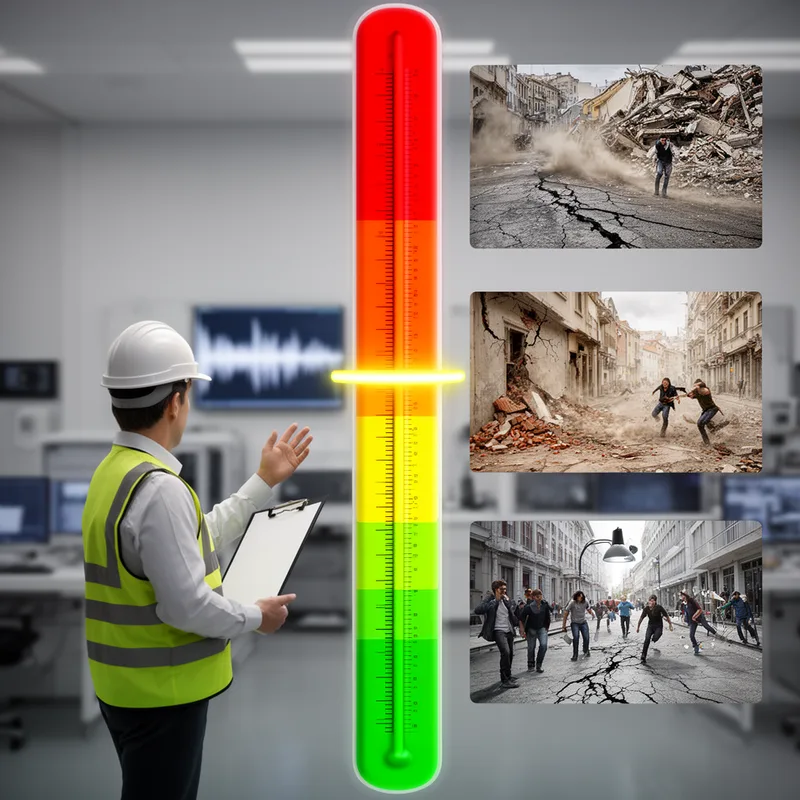
Mercalli scale
- noun
- /mɜrˈkɑːli skeɪl/
- Specialized
- The Mercalli scale measures earthquake intensity.
Examples
-
The Mercalli scale rates earthquake intensity based on visible effects rather than instrument readings.
-
In 1906, the San Francisco earthquake was estimated at level XI on the Mercalli scale.
-
Engineers studied the area to assess damage according to the Mercalli scale.
-
How does the Mercalli scale measure earthquake intensity?
-
The Mercalli scale measures the intensity of earthquakes using Roman numerals from I to XII.
-
After the earthquake, scientists assessed the damage and rated the Mercalli scale at VII.
-
The Mercalli scale indicates that an intensity of IX corresponds to significant structural damage.
Surface Forms
Morphology
Mercalli + scale
‘Mercalli’ is an eponym (a proper name) and carries no semantic cue to earthquakes, while ‘scale’ clearly signals a measurement system; a learner who knows both words can infer it is a named measurement scale but cannot derive that it specifically measures earthquake intensity. The pattern NAME + scale is cross-linguistically common, so partial inference is possible but the crucial domain-specific meaning is not predictable from the constituents alone.
Etymology
Mercalli scale is named after the Italian scientist Giuseppe Mercalli, who measured earthquakes by walking through towns and noting what people felt and which buildings were damaged. That's why the scale rates how strongly a quake was 'felt' and the visible 'damage', not just machine readings.

