
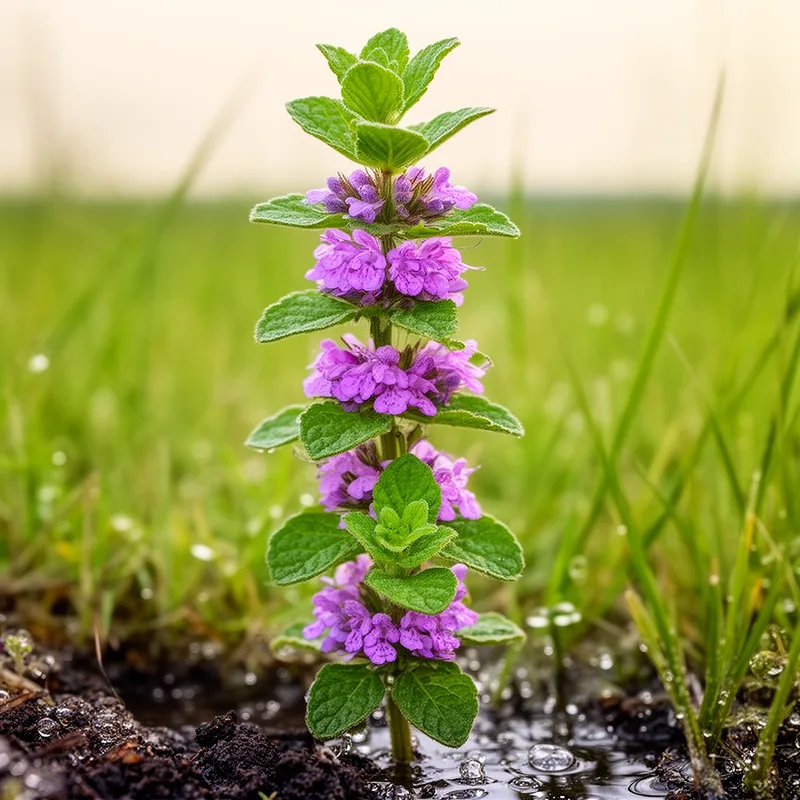
Mentha pulegium
- noun
- Specialized
- The leaves of Mentha pulegium have been historically used to flavor dishes and teas.
Examples
-
Many herbalists caution against using Mentha pulegium oil due to its potential toxicity.
-
In the wild, Mentha pulegium can be found growing along damp field margins in southern Europe.
-
I love the smell of Mentha pulegium in the garden.
-
The Mentha pulegium plant is often used in herbal remedies.
-
Many herbalists caution against using Mentha pulegium oil due to its potential toxicity.
-
The leaves of Mentha pulegium have been historically used to flavor dishes and teas.
-
The Mentha pulegium plant is often used in herbal remedies.
Synonyms


 1
9.9
1
9.9
A small mint plant with a strong smell used to repel insects and for simple herbal remedies
How Aromatic
- Specialized

- Specialized
- Specialized
- Specialized
- Specialized
Surface Forms
Morphology
Mentha + pulegium
The genus element 'Mentha' clearly signals the mint family, so a learner who recognises that constituent could reasonably infer this is a type of mint. However, the species epithet 'pulegium' is not semantically transparent to a B1 learner and the specific sense 'pennyroyal / aromatic oil' cannot be derived from the parts or everyday English composition, so the overall item is only partially predictable.
Etymology
Mentha pulegium may come from old words Mentha meaning 'mint' and pulegium from a word for 'flea'. People once used this mint to keep fleas away, so the name points to its use 'to repel fleas'.