

Melophagus ovinus
- noun
- Specialized
- The veterinarian found several Melophagus ovinus attached to the sheep's fleece.
Examples
-
Sheep infested with Melophagus ovinus may suffer from irritation and skin damage.
-
Regular inspections help farmers detect and control Melophagus ovinus infestations.
-
The Melophagus ovinus is a common pest in sheep farms.
-
Farmers often struggle with Melophagus ovinus infestations.
-
Farmers often implement treatments to prevent Melophagus ovinus infestations in their sheep.
-
When sheep have Melophagus ovinus, they may show signs of restlessness due to itching.
-
An outbreak of Melophagus ovinus can result in significant health issues for livestock.
Synonyms

 1
9.9
1
9.9

A small fly without wings that lives on sheep and other animals and drinks their blood

A small wingless fly that lives on sheep and drinks their blood
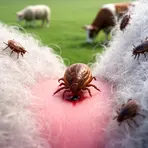
A small wingless fly that lives on sheep and cattle and sucks blood
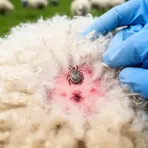
A small animal that lives on sheep, drinks their blood, and can spread disease
Surface Forms
Morphology
Melophagus + ovinus
The form is a scientific binomial (genus + species) and thus compositional: 'Melophagus' is given as a genus of flies parasitic on sheep, and 'ovinus' is clearly related to Latin/English 'ovine' meaning 'of sheep'. A learner who knows both constituents can directly infer this refers to the sheep-associated fly (sheep ked), so the meaning is transparent.
Etymology
Melophagus ovinus may come from older word parts where -phagus means 'eater' and ovinus means 'of sheep'. This wingless fly lives on sheep, clings to their wool and feeds on their blood, so the name helps you remember it is a parasite of sheep.