
Melanerpes erythrocephalus
- noun
- /ˌmɛləˈnɜrˌpɛs ˌɛrɪθroʊˈsɛfələs/
- Specialized
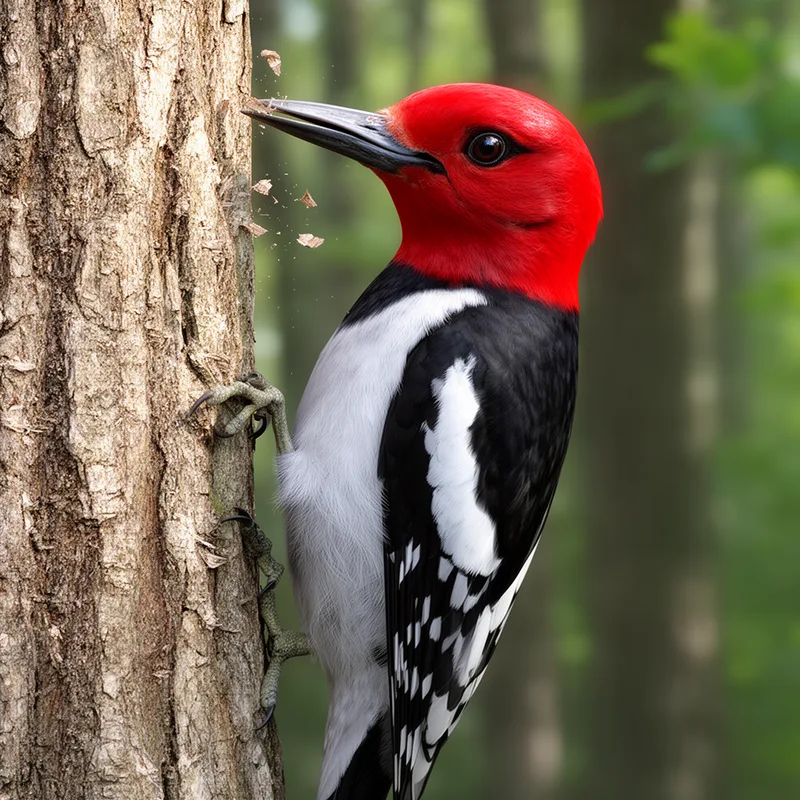
- The Melanerpes erythrocephalus is noted for its vibrant red head and striking black-and-white plumage.
Examples
-
Conservation efforts have helped increase the Melanerpes erythrocephalus population in some regions.
-
The Melanerpes erythrocephalus is often spotted in open woodlands.
-
Birdwatchers were excited to spot a Melanerpes erythrocephalus during their morning walk.
-
Have you ever seen a Melanerpes erythrocephalus in the wild?
-
Birdwatchers were thrilled to see a Melanerpes erythrocephalus, known for its bright red head, while hiking through the forest.
-
The Melanerpes erythrocephalus can be recognized by its black-and-white feathers and distinctive red cap.
-
In spring, the Melanerpes erythrocephalus often creates loud drumming sounds as it seeks to attract a mate.
Synonyms

A North American woodpecker with black-and-white body and a red head and neck

A medium-sized North American bird that pecks tree trunks, with black and white feathers and a bright red head
Surface Forms
Morphology
Melanerpes + erythrocephalus
This is a Latin scientific binomial: 'Melanerpes' is a genus name (a proper noun) and 'erythrocephalus' is a classical compound (erythro- 'red' + -cephalus 'head') not presented as ordinary English words. An average B1 learner who knows everyday English vocabulary would not be able to derive the species description from these specialized/formal elements, so the meaning is not transparently accessible from the constituents.
Etymology
Melanerpes erythrocephalus may come from old Greek parts: melan meaning 'black' and erythrocephalus meaning 'red-headed'. So the name creates a clear image of a black-and-white woodpecker with a bright red head, which is why it refers to the red-headed woodpecker today.

