
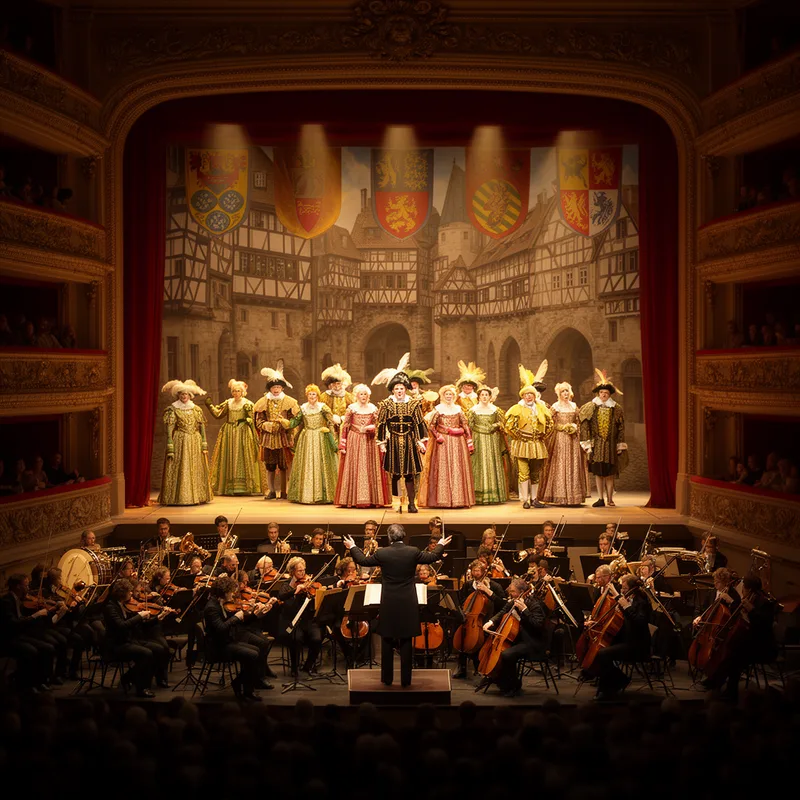
Meistersinger


 1
9.9
1
9.9
- proper noun
- /ˈmaɪstərˌzɪŋɡər/
- Each feat was climaxed by vigorous bursts of Die Meistersinger from the Viennese Trio.
- Meistersinger overture
- Die Meistersinger
Examples
-
During the performance of "Meistersinger," the audience was captivated by the rich melodies.
-
"We'll know of his talent soon enough," Meistersinger Clieous said, gesturing toward the book.
Fiction book (1992) -
I am the new Meistersinger.
Fiction book (1992) -
I think that this is one of the main subjects of the Meistersinger.
Academic text (1998) -
You said being a Meistersinger would be a waste of my talent," Casimir noted.
Fiction book (1992) -
"How will you help us, Meistersinger Zhone Clieous?" came the raucous response.
Fiction book (1992) -
At last, Meistersinger Clieous signaled the remaining bards to line up along the dark wall backstage.
Fiction book (1992) -
Many opera enthusiasts regard "Meistersinger" as Wagner's most accessible work.
-
The character Hans Sachs in "Meistersinger" represents the ideal of the noble artist.
Surface Forms
Morphology
Etymology
Meistersinger is often the short name for the opera Die Meistersinger von Nürnberg, which means 'The Master Singers of Nuremberg'. The title uses German Meister ('master') and singer ('singer'), which is why people call the work simply Meistersinger.