
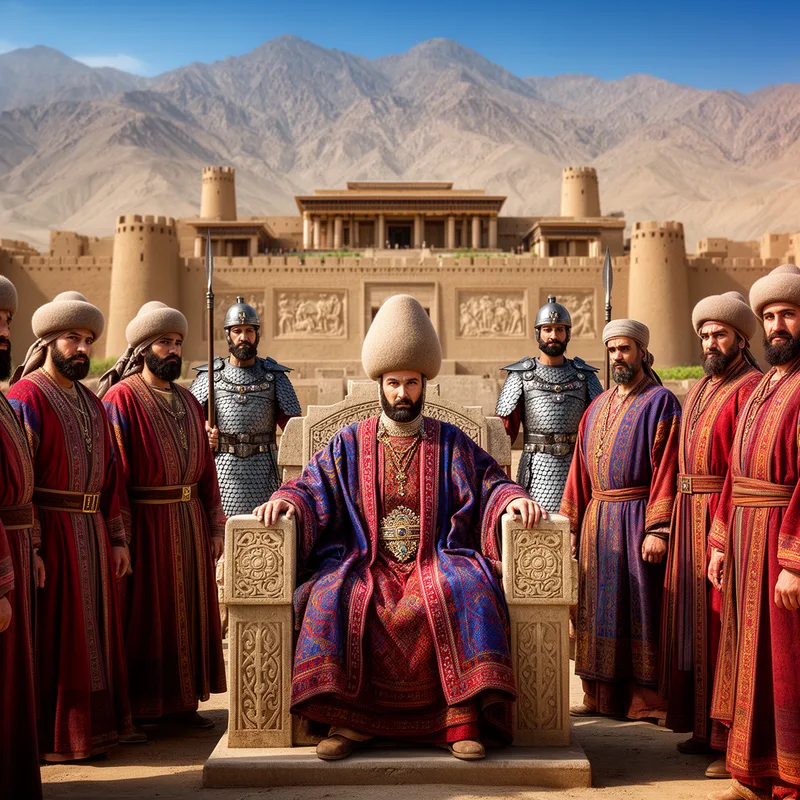
Medes
 1
9.9

- proper noun
- In the first millennium BCE, the Medes played a significant role in the history of ancient Iran.
- Medes and Persians
Examples
-
The Medes were known for their fierce resistance against the Assyrians during their conquests.
-
When the Medes and Persians conquered Babylon in 539 B.C., they came with their own religious practices and gods, so they had no need of the priests of the Babylonian religious system.
Blog text (5) -
Peres: Your kingdom is divided and given to the Medes and Persians.
Blog text (8) -
The Magi were the priests of the ancient Medes and Persians.
Blog text (18) -
The Medes occupied the west, the Persians established themselves in the south, and the Parthians settled in the northeast.
Academic text (2007) -
Meanwhile, Saddam Hussein also saw a chance to strike Iran in a replay of the ancient battles between the Babylonians and the Medes.
Academic text (1991) -
For instance, a tenth-century Byzantine "encyclopedia," the Souda, states that sorcery and magic were invented by the ancient Persians and Medes.
Academic text (2008) -
Now, it came to pass in the days of King Xerxes, who ruled over the empire of the Medes and Persians, from Ethiopia to India, that in the third year of his reign, he decreed a season of feasting.
-
In ancient times, there were many great nations: the Egyptians, Persians, Phoenicians, Medes, Hittites, Etruscans, Carthaginians, and others; and then there were the Greeks, a small nation consisting perhaps of a million people, or even less.
Academic text (1990) -
The ancient Medes established a powerful kingdom in what is now northwestern Iran.
Surface Forms
Etymology
Medes comes from an old Persian name Māda and the Greek form Medoi, both used for the people who lived in the region called Media in northwestern Iran. So Medes simply means 'the people of Media', which is why the word names that ancient Iranian group.