
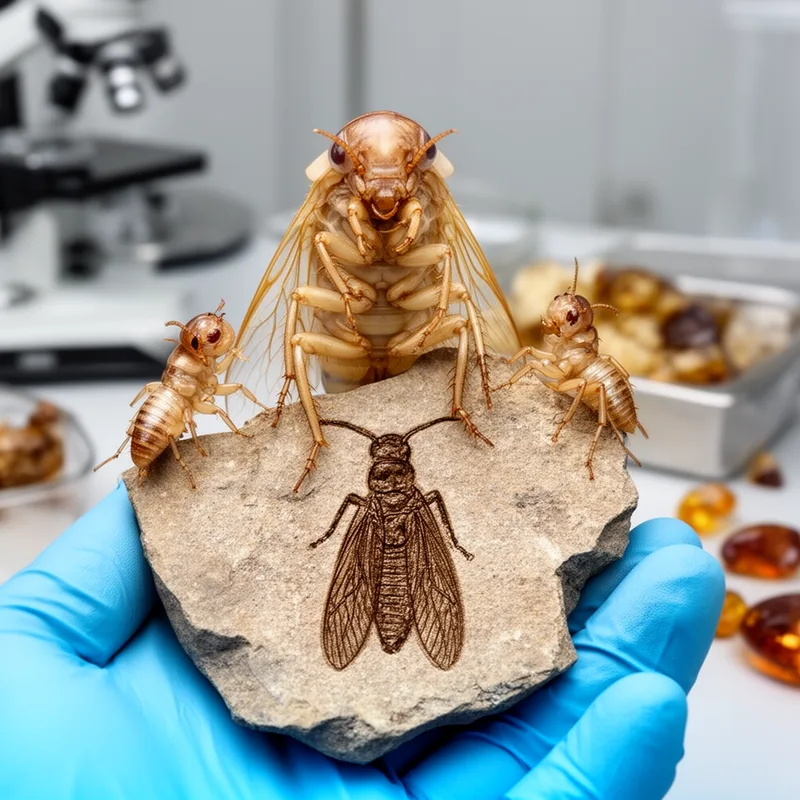
Mastotermitidae


 1
9.9
- noun
- /ˌmæstəˈtɜːrmɪˌtiːdeɪ/
- Specialized
- Fossil records show that Mastotermitidae have existed since the Cretaceous period.
Examples
-
The Mastotermitidae family contains only one living species today, Mastotermes darwiniensis.
-
Scientists study Mastotermitidae to understand the evolution of termites.
-
The Mastotermitidae family is known for its unique characteristics.
-
Many scientists study the Mastotermitidae to learn about ancient termites.
-
The Mastotermitidae are a family of primitive termites that display ancient characteristics not found in modern species.
-
Researchers discovered fossilized remains of Mastotermitidae, showing they existed millions of years ago.
-
Unlike other termites, the Mastotermitidae retain some ancestral traits that give insight into their evolutionary history.
Surface Forms
Morphology
Mastotermitidae = Mastotermes (opaque) = Mastotermit + idae
The suffix '-idae' is a technical zoological family marker; this formation is a specialized taxonomic coinage not readily interpretable by general learners.
Etymology
Mastotermitidae is a scientific family name made from the termite name Mastotermes plus the family ending -idae, the same ending used for animal families like Canidae for dogs and Felidae for cats. So Mastotermitidae literally means 'the family of Mastotermes', which fits because it names a small, very old group of primitive termites.