
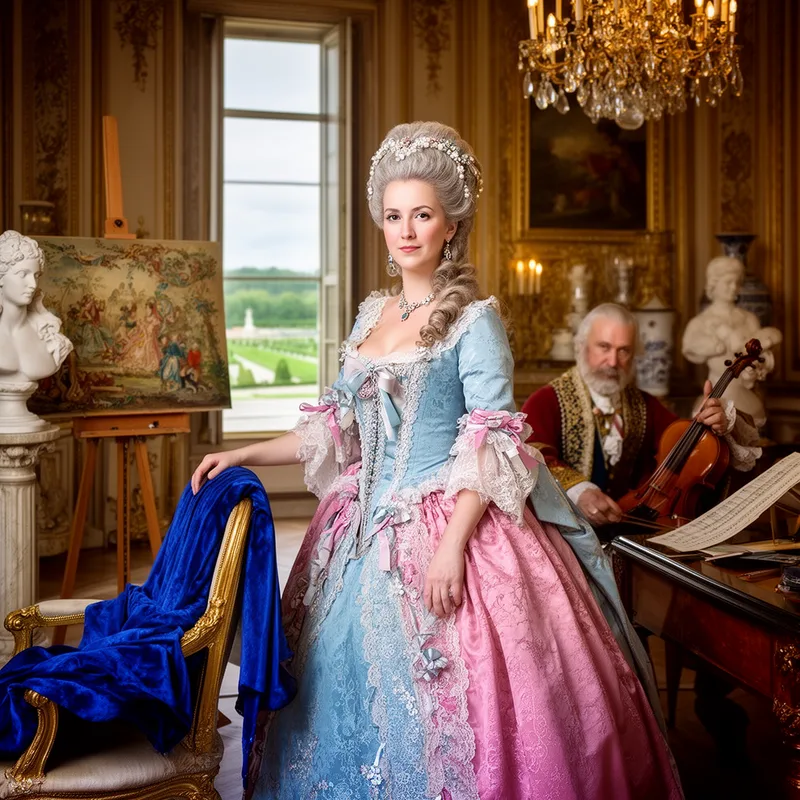
Marquise de Pompadour


 1
9.9
- proper noun
- The Marquise de Pompadour played a key role in shaping the cultural landscape of France during the reign of Louis XV.
Examples
-
Many artists of the 18th century sought favor with the Marquise de Pompadour for her significant influence at the French court.
-
Exhibitions often highlight the taste and patronage of the Marquise de Pompadour in rococo art.
-
The Marquise de Pompadour was a prominent figure in 18th-century France.
-
Did you know that Marquise de Pompadour influenced many artists?
-
Exhibitions often highlight the taste and patronage of the Marquise de Pompadour in rococo art.
-
Many artists of the 18th century sought favor with the Marquise de Pompadour for her significant influence at the French court.
-
The Marquise de Pompadour played a key role in shaping the cultural landscape of France during the reign of Louis XV.
Synonyms
 1
9.9
A French noblewoman who was the chief mistress and close adviser to King Louis XV
 1
9.9
A French noblewoman who was King Louis XV's main mistress and influenced art and politics
Surface Forms
Morphology
The phrase is a compositional proper name formed from a title ('marquise') + the French preposition 'de' + a family name ('Pompadour'), so a learner who knows the constituents can infer this refers to a noblewoman called Pompadour. While detailed biographical roles (chief mistress, patron of the arts) are encyclopedic, the basic referential meaning (a titled French noblewoman) is directly derivable from the parts and follows cross-linguistic title+name patterns.
Etymology
Marquise de Pompadour was a real French noblewoman who became the king's official 'chief mistress' and a close friend of many artists. Because she used her power to ask for paintings, decorate the court, and help artists, her name now reminds people of style, taste, and support for the arts.